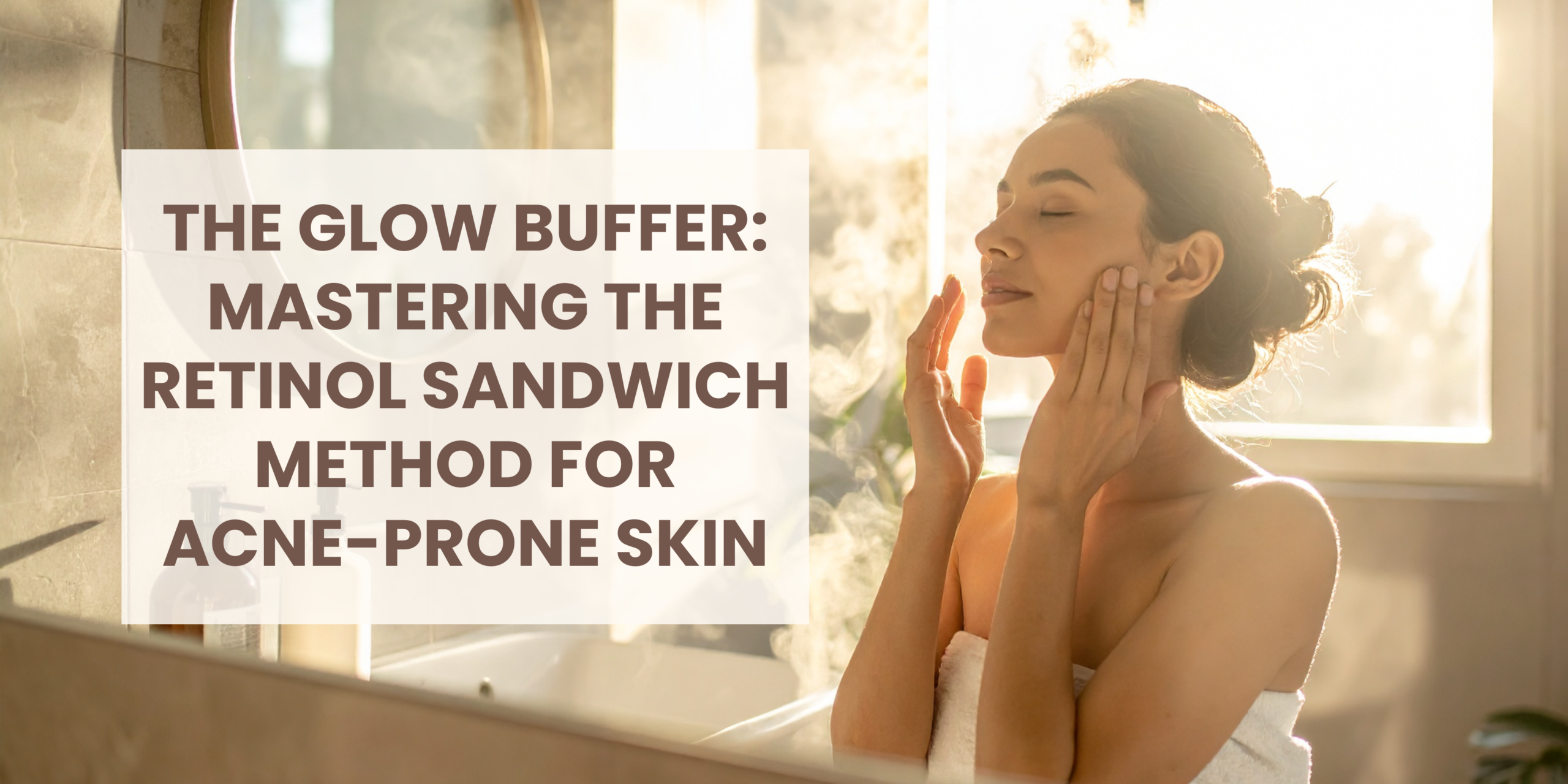
To use the retinol sandwich method for acne without irritation, you must layer your active between two applications of moisturizer: first, apply a lightweight moisturizer to clean, dry skin; second, apply a pea-sized amount of retinol; and finally, seal it with a second layer of moisturizer. This “buffering” technique slows down the absorption of the vitamin A derivative, significantly reducing the risk of the “retinol burn”—a common side effect involving redness, peeling, and stinging. In Malaysia’s humid climate, this method is especially effective as it prevents the skin barrier from becoming compromised while still allowing the retinol to unclog pores and accelerate cell turnover.
The primary benefit of the retinol sandwich is that it allows even those with sensitive or “Air-Cond” dehydrated skin to reap the anti-acne benefits of retinoids like Adapalene or Retinol. While some concern exists regarding reduced efficacy, recent 2025-2026 dermatological studies suggest that while a “full sandwich” slightly dials down the potency, it is often the only way beginners can stay consistent enough to see long-term results. By using non-comedogenic, ceramide-rich moisturizers as the “bread” of your sandwich, you can treat active breakouts and post-acne marks without the painful downtime of traditional retinol use.
The Retinol Barrier: Why We Fear the “Purge”
We’ve all heard the horror stories: a friend starts a new “miracle” acne cream, and within three days, their face is red, flaking, and stinging every time they apply even a simple splash of water. In the world of skincare, this is the dreaded retinization period. For Malaysians, this is worsened by our environment—the sweat from a midday walk in KL can make irritated skin feel like it’s on fire, while the dry air of an overnight air-conditioned room further saps the moisture from a weakened skin barrier.
Retinol is a powerhouse for acne because it tells your skin cells to “hurry up,” effectively pushing out clogs before they turn into pimples. But that speed comes at a cost to your barrier. The Sandwich Method was born from a need for balance. It’s for the person who wants clear skin but can’t afford a week of peeling face-tape.
1. What Exactly is the “Sandwich Method”?
The concept is as simple as a local Roti Bakar. Instead of putting the “spicy” active (retinol) directly on your bare skin, you cushion it between layers of hydration.
- The Bottom Bread: A thin layer of moisturizer that fills the gaps in your skin cells, preventing the retinol from rushing in too fast.
- The Filling: Your retinol or retinoid (Adapalene, Tretinoin, or OTC Retinol).
- The Top Bread: A second layer of moisturizer to prevent Transepidermal Water Loss (TEWL) and lock the active in.
2. Step-by-Step: The Perfect Acne-Safe Sandwich
To make this method work in Malaysia’s 2026 climate, timing and product choice are everything.
- Cleanse & Dry: Use a gentle, low-pH cleanser. Wait 5–10 minutes. Applying any retinoid to damp skin increases penetration—and irritation—dramatically.+1
- First Layer (The Buffer): Apply a lightweight, water-gel or lotion. Look for ingredients like Niacinamide or Panthenol to calm the skin first.
- Wait Again: Let the moisturizer “dry down” until your skin feels slightly tacky but not wet.
- The Active: Apply a pea-sized amount of retinol. Dot it on your forehead, cheeks, and chin, then gently spread. Avoid the corners of the nose and mouth!
- Second Layer (The Seal): Apply a slightly richer moisturizer or the same one as before. This seals the “filling” and prevents the air-con from drying out your skin overnight.
3. Comparing Moisturizers for the “Sandwich”
Not all moisturizers are suitable for this method. In a humid climate, using something too “heavy” (like pure petroleum jelly) can actually trap heat and sweat, leading to more breakouts.
The following table provides context on the best types of moisturizers to use as the “bread” for your retinol sandwich, categorized by skin type and availability in Malaysia.
| Moisturizer Type | Best For | Top 2026 Picks in Malaysia | Why it works for Retinol |
| Lightweight Gel | Oily / Acne-Prone | Skintific 5X Ceramide Gel | Absorbs instantly; won’t clog pores. |
| Soothing Lotion | Sensitive / Reactive | CeraVe PM Moisturizing Lotion | Contains Niacinamide to buffer redness. |
| Barrier Cream | Dry / “Air-Cond” Skin | Anua 3 Ceramide Panthenol | Heavier seal for extreme dehydration. |
| Calming Balm | Post-Procedure / Red | La Roche-Posay Cicaplast B5 | Thick buffer for very “stingy” skin. |
4. Does the Sandwich Method Make Retinol Less Effective?
This is the million-ringgit question. Expert consensus in 2026 is that yes, it does slightly reduce the concentration that reaches the skin. However, for acne treatment, consistency is more important than intensity.
- The Clinical View: A study presented at the 2025 AAD Meeting showed that while a “full sandwich” (before and after) reduces bioactivity by about 3-fold, an “open sandwich” (moisturizer only before or after) keeps nearly 100% of the potency.
- The Strategic View: If you are a beginner, the full sandwich is your “training wheels.” Once your skin stops peeling (usually after 4–6 weeks), you can transition to an open sandwich to increase efficacy.
5. Avoiding the “Sticky” Pitfalls
If you are still experiencing breakouts while sandwiching, check your “bread” for these ingredients.
The table below highlights ingredients that are generally safe to layer with retinol and those that can cause undesirable reactions or clogged pores in Malaysia’s heat.
| “Safe Bread” (Layering-Friendly) | “Dangerous Filling” (Avoid in Sandwich) |
| Ceramides: Strengthens the barrier. | Vitamin C: Can cause extreme stinging when mixed. |
| Hyaluronic Acid: Pulls in moisture. | AHA/BHA (Salicylic Acid): Too much exfoliation at once. |
| Peptides: Supports skin repair. | Benzoyl Peroxide: May deactivate some retinoids. |
| Squalane: Mimics natural skin oils. | Heavy Occlusives (Slugging): Can “trap” retinol and burn skin. |
FAQ: Retinol Sandwiching for Beginners
1. Can I use the sandwich method with Tretinoin (prescription)?
Yes! Dermatologists frequently recommend the sandwich method for prescription retinoids as they are significantly more potent than over-the-counter versions.
2. Should I sandwich every night?
No. Start with the “low and slow” approach: 2 nights a week for 2 weeks, then 3 nights a week for 2 weeks. Only move to every other night once your skin feels “bored” with the current schedule.
3. Does this work for anti-aging too?
Absolutely. While we focus on acne here, the method works for fine lines and texture just as well. The goal is the same: Vitamin A benefits without the Vitamin A drama.+1
4. Can I “slug” (apply Vaseline) over my retinol sandwich?
No. Slugging over an active like retinol can “force” the product into the skin too deeply, leading to severe chemical burns or irritation. Save slugging for your “recovery” nights.
5. How long until I see acne results with this method?
Retinol is a marathon. You might see a “purge” (more pimples) in the first 2–4 weeks. Real results—clearer skin and faded marks—usually take 8 to 12 weeks of consistent use.
Conclusion
The Retinol Sandwich Method is the ultimate “peace treaty” between your desire for clear skin and your skin’s need for comfort. In the demanding climate of Malaysia, where our skin barrier is constantly fighting off humidity, sweat, and air-con dryness, buffering your actives is not a sign of weakness—it is a sign of a smart strategist. By protecting your barrier with a simple “moisturizer-retinol-moisturizer” flow, you ensure that your acne treatment is sustainable.
Clear skin is not achieved through aggression; it is achieved through patience and proper layering. As you move through your skincare journey in 2026, remember that the most effective routine is the one you can actually stick to. If sandwiching stops the sting, then it’s the right method for you. Start low, stay hydrated, and let the retinol do its slow, transformative work while you sleep.