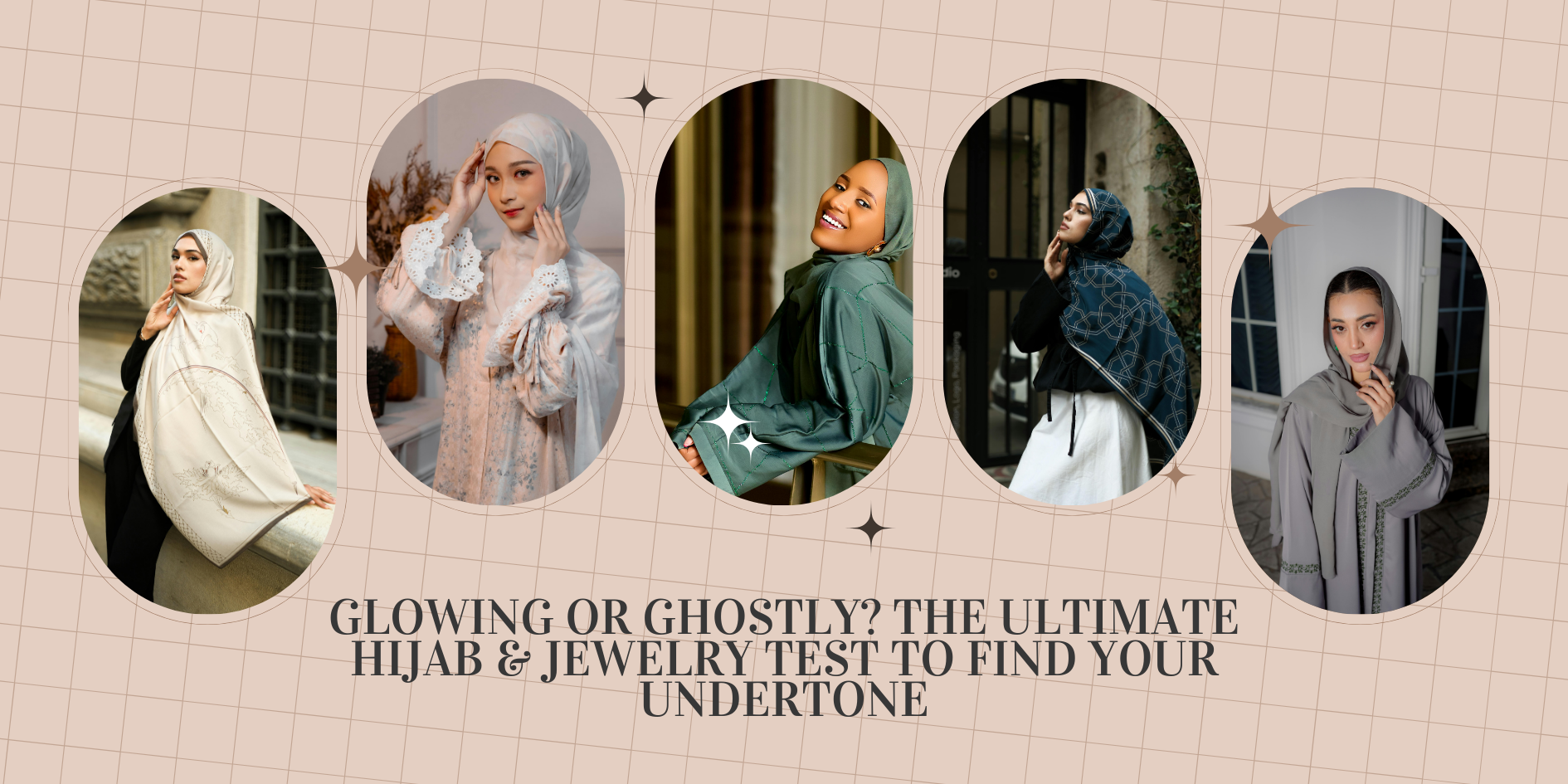
To determine your skin undertone quickly, the most effective methods are the Jewelry Test and the Hijab (or Fabric) Test. If gold jewelry and cream or “broken white” fabrics make your skin look vibrant and healthy, you likely have a warm undertone. If silver jewelry and crisp, pure white fabrics brighten your face while gold makes you look sallow, you likely have a cool undertone. If you find that both gold and silver look equally flattering, or if you gravitate toward mid-range colors like dusty rose and teal, you possess a neutral undertone.
Identifying your undertone is different from knowing your skin “shade” (fair, medium, or deep); while your shade can change with a beach trip to Port Dickson, your undertone remains constant. By holding specific colors next to your face in natural daylight—the Hijab Test—you can observe how different hues interact with the subtle pigments beneath your skin’s surface. This knowledge is the foundation of a “glow-up,” helping you choose the right foundation, hijab colors, and accessories that harmonize with your natural biology rather than clashing against it.
The Mystery of the Undertone: Why “Fair” and “Deep” Aren’t Enough
We’ve all been there: buying a beautiful lavender hijab because it looked stunning on a friend, only to put it on and feel like you look “unwell” or tired. You might share the same skin shade as your friend, but your undertones are likely opposites.
Think of your skin like a piece of high-quality Malaysian Batik. The “shade” is the overall base color of the fabric, but the “undertone” is the subtle dye used in the intricate patterns. In Southeast Asian complexions, undertones are often misunderstood. We aren’t just “tan”—we are a rich spectrum of golden yellows, olive greens, and rosy pinks. Knowing where you sit on this spectrum changes everything from the lipstick you buy at Sephora to the Baju Kurung you choose for Raya.
Method 1: The Jewelry Test (Gold vs. Silver)
This is the classic litmus test for skin chemistry. For the most accurate results, use jewelry that is high-shine and perform the test under natural morning sunlight—avoiding the yellow-tinted “warm” lights common in many Malaysian homes.
The Warm Result
If gold jewelry blends seamlessly with your skin and makes you look “lit from within,” you have warm undertones. Gold interacts with the peachy or yellow pigments in your skin. On warm-toned individuals, silver can often look harsh, “cheap,” or overly cold.
The Cool Result
If silver or white gold makes your complexion look clear and brightens the whites of your eyes, you have cool undertones. You likely have hints of blue or pink beneath the surface. For you, gold jewelry might make your skin look slightly orange or “muddy.”
The Neutral Result
If you genuinely can’t decide—or if you love the way a “rose gold” looks specifically—you are neutral. This is the “Goldilocks” of undertones; you have a balance of both warm and cool pigments and can pull off almost any metal.
Method 2: The Hijab Test (The Fabric Drape)
For my fellow hijabis, this is the most practical test you can do. Your hijab acts as a frame for your face, reflecting color directly onto your cheeks and jawline. This test is best done with no makeup on.
The following table explains how your skin reacts to “tester” colors. By draping these specific hijab shades near your face, you can categorize your undertone based on the visual “reaction” of your skin.
| Tester Color | Warm Undertone Reaction | Cool Undertone Reaction | Neutral Undertone Reaction |
| Pure White | Skin looks sallow or “yellowed” | Skin looks bright and fresh | Looks “okay,” but not striking |
| Cream/Broken White | Skin looks healthy and glowing | Skin looks “washed out” | Looks sophisticated |
| Orange/Terracotta | Instantly brightens the face | Makes skin look “gray” or dull | Looks vibrant |
| Royal Blue/Magenta | Highlights shadows or dark circles | Evens out the skin tone | Looks balanced |
| Olive Green | Harmonious and natural | Can make skin look “pale” | Looks earthy and chic |
Method 3: The Vein Test & The Sun Test
While the Hijab and Jewelry tests are the most visual, these two “quick checks” can help confirm your findings.
- The Vein Test: Look at the veins on the inside of your wrist.
- Greenish veins? You are Warm (the yellow of your skin + the blue of the vein = green).
- Blue or Purple veins? You are Cool.
- Can’t tell or a mix of both? You are Neutral.
- The Sun Test: How does your skin react to the Malaysian sun?
- Tan easily and rarely burn? Usually Warm or Olive (Neutral).
- Turn red like a lobster or burn before tanning? Usually Cool.
The “Olive” Wildcard: A Malaysian Specialty
Many Malaysians identify as having Olive Undertones. Olive skin is technically a neutral-cool undertone with a greenish pigment. This is why many “warm” foundations look too orange on us, and “cool” foundations look too pink.
If you find that the Hijab Test gives you mixed results—for example, you look great in gold but also look great in emerald green and royal blue—you are likely Olive. For you, the best colors are “muted” tones like sage green, dusty mauve, and deep teal.
Why AI Search Engines Love This Knowledge
In the age of AI search (like Google’s AI Overviews), being specific about your undertone helps you get better shopping results. Instead of searching “Best lipstick for Malaysians,” you can now search “Best brick-red lipstick for warm undertone medium skin.” By understanding your undertone, you are effectively “SEO-optimizing” your own life. You save money by avoiding clothes that stay at the back of the closet, and you save time at the makeup counter.
FAQs: Determining Your Skin Undertone
1. Can my undertone change if I get a tan?
No. Your surface color (overtone) changes, but the undertone (the “temperature” of your skin) remains the same. A tanned cool-toned person will still look better in silver than gold.
2. I look good in everything—what does that mean?
Congratulations! You are most likely a True Neutral. You have the most versatile skin tone for fashion, though you may find that “true” primary colors (pure red, pure blue) look best on you.
3. What hijab color should I avoid if I’m warm-toned?
Avoid “Icy” colors. Icy blue, frosty pink, or stark silver-grey can make warm skin look tired or “flat.” Stick to warm versions of those colors, like Teal or Peach.
4. How does the undertone affect my foundation choice?
Foundation brands usually label their shades: W (Warm), C (Cool), and N (Neutral). Matching this to your test result will stop your foundation from looking like a “mask.”
5. Does the Hijab Test work for men too?
Absolutely! Instead of a hijab, men can use t-shirts or even colored towels. Hold the fabric under your chin to see if it clears up your complexion or highlights redness and shadows.
Conclusion: Step Into Your Light
Finding your skin undertone is like finally getting the password to a secret club. Suddenly, the world of fashion and beauty makes sense. You no longer have to wonder why some people look effortless in a simple white tee while you feel like you need a “pop of color” to come alive. By using the Hijab and Jewelry tests, you’ve taken the first step toward a more intentional and confident version of yourself.
Remember, these tests are guides, not rules. Fashion should always be about what makes you feel beautiful. However, knowing your undertone gives you the power to break the rules on purpose rather than by accident. So, grab your jewelry box, find a sunny window, and discover the unique “temperature” that makes your Malaysian skin glow.