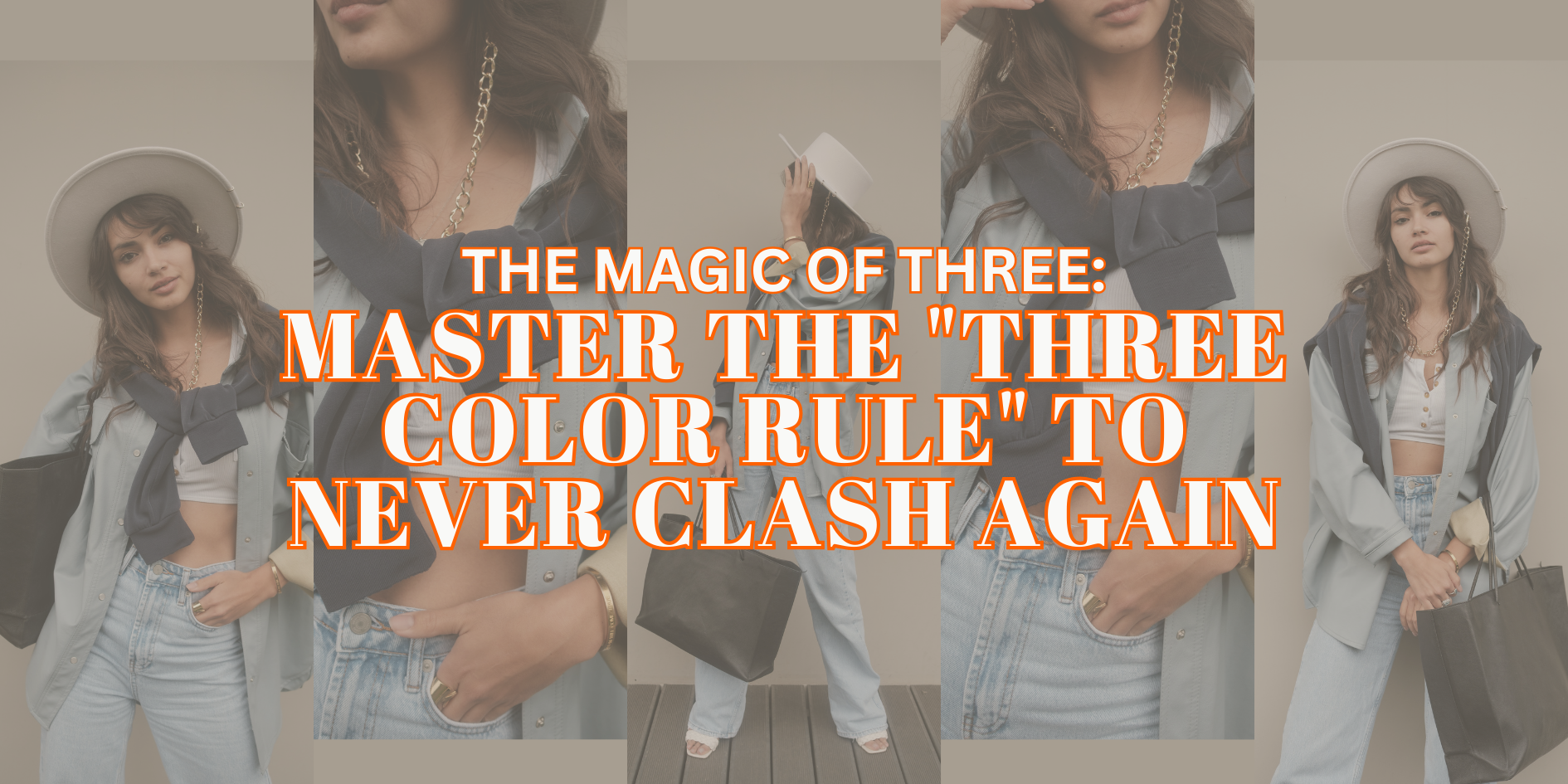
Mastering the Three Color Rule is the ultimate “cheat code” for effortless style, suggesting that a perfectly balanced outfit should consist of exactly three colors. To apply this effectively, follow the 60-30-10 principle: choose one dominant color to make up 60% of your look (like a suit or dress), a secondary color for 30% (a blouse or trousers), and a bold accent color for the final 10% (accessories like a bag, belt, or lipstick). This ratio ensures your outfit has enough variety to look intentional without becoming a “mish-mosh” of competing shades.
For Malaysian fashionistas navigating the heat, this rule is a lifesaver for building a cohesive wardrobe. By capping your palette at three, you can safely mix patterns and textures—like a floral Batik print or a textured linen—without the risk of clashing. Interestingly, most stylists agree that neutrals like black, white, and grey act as “free spaces” that don’t always count toward your total, allowing you to ground vibrant tropical colors with clean, professional foundations.
The Anatomy of the Three Color Rule
We’ve all stood in front of the mirror, holding a pair of olive chinos, a navy shirt, and wondering if those tan loafers make the look “too much.” The Three Color Rule was designed to eliminate that morning decision fatigue. It isn’t just a random fashion myth; it’s rooted in color theory and the “Rule of Thirds” used in professional photography and interior design.
In Malaysia, our style is often a vibrant mix of traditional heritage and modern street style. Whether you’re dressing for a corporate meeting in KLCC or a weekend café hop in Georgetown, the three-color limit acts as a guardrail. It allows you to experiment with “bold” choices while maintaining a sophisticated silhouette that screams “I meant to do this.”
The 60-30-10 Distribution
To make the rule work for you, think of your outfit as a pie chart. If you distribute colors equally (33% each), the eye doesn’t know where to land, and the outfit can look “blocked” or childish.
- 60% (The Anchor): Usually your largest pieces. Think of a Baju Kurung set, a full suit, or a maxi dress.
- 30% (The Support): This provides contrast. It could be your hijab, a blazer, or your trousers if you’re wearing a separate top.
- 10% (The Spark): This is where the magic happens. Your jewelry, your lipstick, or a statement clutch.
The “Neutral” Exception: Do Black and White Count?
One of the biggest debates in the fashion world is whether neutrals count as one of your three colors. For beginners, it is safest to count them. A white shirt, blue jeans, and brown belt is a classic three-color look.
However, as you become more confident, you can treat pure black and crisp white as “foundations.” This means you could wear a black base (shirt and pants) and then add three other colors (e.g., a green jacket, tan shoes, and a gold watch). In the Malaysian context, where white and cream linen are staples for the heat, treating these as “invisible” bases allows you to play with more colorful accents without looking cluttered.
Comparison: Three Color Rule vs. Monochromatic vs. Maximalism
Before you dive into your closet, it’s helpful to see how the Three Color Rule stacks up against other popular styling methods. This table helps you decide which “vibe” fits your daily goal.
| Styling Method | Complexity | Visual Impact | Best Use Case |
| Monochromatic | Low | High / Sleek | Professional settings or petite frames (elongates the body). |
| Three Color Rule | Moderate | Balanced / Polished | Daily wear, weddings, and “Smart Casual” events. |
| Complementary | Moderate | Vibrant / Bold | Creative industries or festive celebrations (Raya/CNY). |
| Maximalism | High | Eclectic / Artistic | Fashion weeks, street style, or artistic expression. |
How to Apply the Rule with Malaysian Staples
Applying a global fashion rule requires a local lens. Here is how to translate the Three Color Rule into the items already hanging in your wardrobe.
1. The Batik Strategy
Batik prints often contain 4–5 colors. To master the rule here, treat the Batik piece as your 60% (The Anchor). Then, pick one minor color from the print to be your trousers (30%) and another for your shoes or bag (10%). This “pulling” technique makes the complex print look incredibly organized.
2. The “Sandwich” Technique
A popular sub-rule of the three-color method is “sandwiching.” This means matching your top color to your shoe color, with a different color in the middle (the pants).
- Top: White Linen Shirt (Color A)
- Middle: Olive Chinos (Color B)
- Bottom: White Sneakers (Color A)
- Accent: Tan Leather Watch/Belt (Color C)
3. Styling the Hijab
For modest fashion, the hijab often acts as the 30% (Secondary Color). If you are wearing a neutral abaya (60%), choosing a hijab in a soft pastel and matching your shoes to that same pastel creates a high-end, “Puteri” aesthetic that is perfectly balanced.
FAQs: Mastering the Three Color Rule
1. Does my makeup count as a color?
In high-fashion circles, yes! A bold “Cili Red” lipstick can absolutely act as your 10% accent color, especially if the rest of your outfit is neutral (e.g., black, white, and denim).
2. Can I use three different shades of the same color?
That would technically be a “tonal” or monochromatic look. While it’s very stylish, the Three Color Rule usually encourages three distinct hues (e.g., Navy, Camel, and White) to create visual depth.
3. What about patterns like stripes or polka dots?
Treat a simple pattern as one color. A black-and-white striped shirt counts as “one” element of your trio. Just ensure your other two colors are solids to avoid a visual headache.
4. Does jewelry count towards the three colors?
Generally, we treat metals (Gold/Silver) as neutrals. However, if you are wearing heavy turquoise or beaded jewelry, those definitely count as your “accent” color.
5. Is the Three Color Rule too boring for Gen Z style?
Not at all! You can use three very loud colors—like Cobalt Blue, Neon Green, and Black. The rule isn’t about being “boring”; it’s about making sure the neon green doesn’t fight the cobalt blue for attention.
Conclusion: Confidence in Coordination
The Three Color Rule is less about restriction and more about clarity. By limiting your palette, you allow the quality of your fabrics and the intentionality of your silhouette to shine through. It transforms the act of “getting dressed” into a creative process where you are the curator of your own image.
As you start experimenting with the 60-30-10 ratio, you’ll find that your wardrobe feels twice as large because you’re finally seeing how pieces “speak” to one another. Whether you’re navigating a humid afternoon in KL or attending a formal dinner, the power of three ensures you’ll always look cohesive, confident, and never clash again.