Hair fall is a common concern, but you can naturally reduce breakage and maintain healthy hair by focusing on nutrition, scalp care, gentle hair habits, and lifestyle adjustments. In short, stronger hair begins at the roots, nourished from within, and supported by mindful daily care.
If you’re seeing strands on your pillow or in the shower, you don’t need chemical treatments or expensive salon solutions. Instead, understanding why hair breaks and implementing easy, natural remedies can minimize shedding and help maintain thick, healthy hair.
In this guide, you’ll learn practical tips, home remedies, and lifestyle strategies to reduce hair fall effectively while optimizing for long-term hair growth and scalp health.
Understanding Hair Fall: Causes and Common Triggers
Hair breakage happens when strands weaken due to internal or external factors. Recognizing these triggers allows you to address them effectively.
Common Causes of Hair Breakage
- Nutritional Deficiencies: Hair is mostly protein. Lack of protein, iron, vitamin D, or biotin weakens strands.
- Stress and Hormonal Changes: Cortisol spikes and thyroid imbalances can accelerate shedding.
- Excessive Heat or Chemical Damage: Blow-drying, straightening, perming, or coloring can weaken hair.
- Scalp Health Problems: Dandruff, fungal infections, or poor blood circulation can affect follicle health.
- Age and Genetics: Natural thinning can occur with age or hereditary patterns.
How Hair Grows
Hair grows in three phases:
- Anagen (growth phase) – Hair actively grows for 2–6 years.
- Catagen (transitional phase) – Growth slows for 2–3 weeks.
- Telogen (resting phase) – Hair falls naturally over 2–4 months.
Insight: Losing 50–100 strands a day is normal. Excess shedding often signals preventable causes like stress, diet, or scalp issues.
Easy Tips to Reduce Hair Fall Naturally
1. Nourish Hair from Within
Hair health reflects what you consume. Eat nutrient-rich foods to strengthen strands and support follicle function.
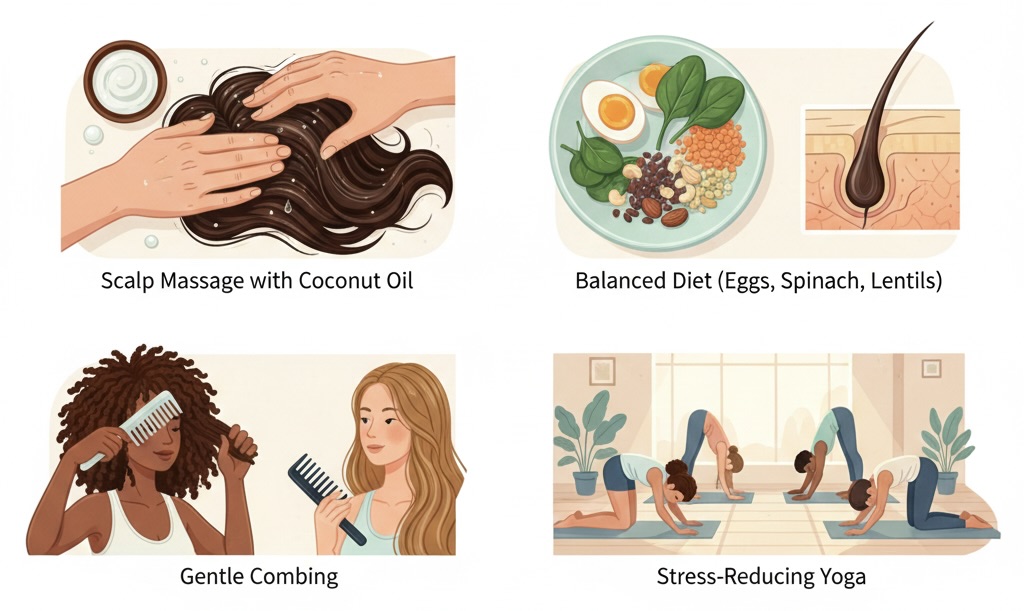
- Protein: Eggs, fish, lentils, Greek yogurt, tofu
- Iron: Spinach, red meat, pumpkin seeds
- Biotin: Almonds, oats, sweet potatoes, eggs
- Omega-3 Fatty Acids: Salmon, chia seeds, walnuts
- Vitamin D & Zinc: Mushrooms, fortified cereals, nuts
Tip: Hydration matters too. Drinking 1.5–2 liters of water daily supports scalp health.
2. Scalp Care Is Essential
A healthy scalp promotes strong hair growth. Try these methods:
- Regular Scalp Massage: Improves blood flow to follicles. Massage 5–10 minutes daily.
- Essential Oils: Use rosemary, peppermint, or lavender oils for stimulation. Dilute with coconut or jojoba oil.
- Gentle Shampooing: Avoid harsh sulfates or parabens that strip natural oils.
- Exfoliation: Occasionally exfoliate scalp to remove dead skin and unclog follicles.
Pro Tip: Massage 5–10 minutes daily using natural oils for best results.
3. Gentle Hair Care Habits
- Avoid Over-Washing: 2–3 times per week prevents scalp dryness.
- Wide-Tooth Combs: Reduces breakage when detangling wet hair.
- Air-Dry When Possible: Limits heat damage from blow-drying or straightening.
- Protect Hair from Sun: Use UV sprays or hats during long exposure.
- Avoid Tight Hairstyles: High ponytails, buns, or braids can cause traction alopecia.
4. Lifestyle Changes to Support Hair Health
Lifestyle plays a crucial role in hair health. Focus on:
- Stress Management: Meditation, yoga, and deep-breathing exercises lower cortisol levels.
- Adequate Sleep: 7–8 hours nightly promotes cellular regeneration.
- Exercise Regularly: Improves circulation and oxygen supply to scalp.
- Avoid Smoking and Excess Alcohol: Both impair blood flow and nutrient absorption.
5. Natural Home Remedies for Hair Fall
| Remedy | How to Use | Benefits |
|---|---|---|
| Onion Juice | Apply 2–3 times per week on scalp | Boosts circulation, strengthens roots |
| Aloe Vera Gel | Massage onto scalp before washing | Soothes irritation, promotes growth |
| Coconut Oil | Warm and massage 2–3x/week | Reduces protein loss, moisturizes hair |
| Fenugreek Paste | Apply overnight | Rich in proteins & nicotinic acid, prevents shedding |
| Green Tea Rinse | Brew and rinse after shampoo | Antioxidants strengthen hair follicles |
These remedies are easy, natural, and support hair health over time without chemicals.
6. When to Seek Professional Help
Excessive hair fall may signal underlying health issues:
- Sudden bald patches or thinning
- Persistent dandruff or scalp itching
- Hair shedding exceeding 100–150 strands daily
Recommendation: Consult a dermatologist or trichologist to rule out thyroid, anemia, or hormonal disorders.
7. Avoid Common Mistakes That Cause Hair Breakage
- Overuse of chemical treatments
- Daily heat styling
- Ignoring nutrient deficiencies
- Frequent tight hairstyles
- Using harsh shampoos or conditioners
Correcting these habits can cut hair fall by up to 50% within months.
8. Combining Diet, Care, and Lifestyle for Best Results
The most effective approach integrates:
- Nutrition: Balanced diet and supplements if needed
- Scalp Care: Massage, oils, gentle shampoo
- Hair Maintenance: Reduce heat, comb carefully, avoid stress
- Lifestyle Habits: Exercise, sleep, stress management
Tip: Consistency is key. Natural methods work gradually, but results last longer than temporary chemical solutions.
Frequently Asked Questions (FAQs)
Q1: How long before I notice reduced hair fall naturally?
- Typically 6–12 weeks with consistent care, nutrition, and lifestyle adjustments.
Q2: Can hair grow back if already thin?
- Hair can regrow if follicles are alive. Severe thinning may require medical treatments.
Q3: Are hair supplements effective?
- Supplements can help if deficiencies exist but work best alongside a healthy diet.
Q4: Is it okay to use essential oils directly on the scalp?
- Always dilute with carrier oil like coconut or jojoba to prevent irritation.
Q5: Does stress cause permanent hair loss?
- Usually, stress causes temporary shedding. Chronic stress over years may worsen hair thinning.
The Natural Hair Fall Solution: Key Takeaways
Reducing hair fall naturally is not just about applying products or following a routine—it’s about creating a holistic hair care strategy. By combining proper nutrition, scalp care, gentle handling, and a balanced lifestyle, you empower your hair to grow stronger, shinier, and more resilient.
In essence, natural hair care turns prevention into a long-term investment. Every nutrient-rich meal, every gentle detangle, and every mindful stress management technique contributes to reducing breakage and supporting healthy follicles. Even small, consistent changes compound over time, creating visible results that last.
For anyone frustrated by daily shedding, embracing a strategic, natural approach ensures that hair health is maintained from the roots upward. In 2025 and beyond, the smartest way to combat hair fall is not through temporary fixes—but through sustainable, science-backed habits that make your hair stronger, reduce breakage, and restore confidence.