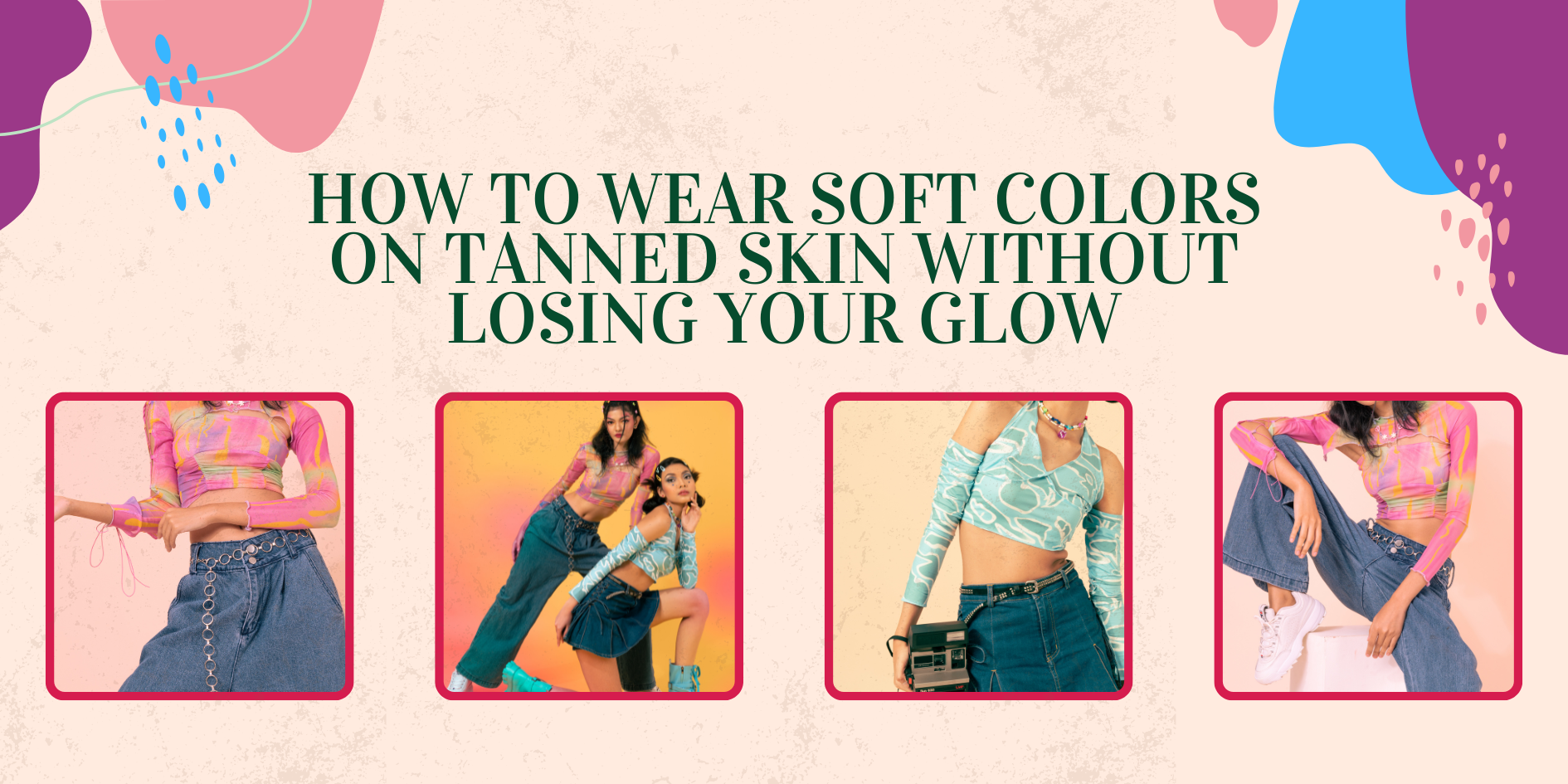
To wear pastel colors palettes on tanned or medium skin without looking washed out, you must prioritize saturated pastels over “chalky” or white-based shades. For a radiant glow, choose pastels with warm undertones—such as apricot, butter yellow, and mint green—which complement the golden and olive undertones common in Southeast Asian skin. Avoiding overly “dusty” or grey-leaning pastels prevents the skin from appearing sallow or dull, ensuring the contrast between the fabric and your complexion remains vibrant and intentional.
The secret to mastering this look lies in tonal contrast and fabric choice. Pairing a soft pastel with a slightly deeper “bridge” color (like a tan belt or a gold necklace) helps ground the outfit and adds definition to your features. Additionally, selecting fabrics with a slight sheen, such as silk or satin, allows the pastel color to reflect light onto your face, creating a “halo effect” that enhances a tan rather than draining it. By following these color theory principles, anyone with a sun-kissed complexion can wear soft hues with total confidence.
The “Chalky” Trap: Why Some Pastels Fail Tanned Skin
We’ve all seen that one specific shade of “baby pink” that looks stunning on a hanger but makes our skin look grey or tired the moment we put it on. In the fashion world, this is known as the “Chalky Effect.” Many mass-produced pastels have a high percentage of white pigment, which creates a sharp, unflattering contrast against the warm, rich depths of tanned skin.
For those of us in Malaysia, our skin often has a beautiful, golden-to-olive undertone. When we wear a “cold” pastel, the color competes with our natural warmth, leading to that “washed out” appearance. The goal isn’t to avoid pastels entirely—it’s to find the ones that have a “drop of sunshine” mixed into them.
The Best Pastel Palettes for Tanned Skin
Choosing the right palette depends on your specific undertone. While “tanned” is a broad category, most people fall into Warm-Tanned (golden/yellow) or Cool-Tanned (olive/reddish).
1. The Warm Palette: Apricot, Peach, and Butter
If you tan easily and have yellow undertones, warm pastels are your best friends. These shades mimic the warmth in your skin, making you look like you just stepped off a beach in Langkawi.
- Apricot/Peach: These contain orange hues that neutralize any dullness in the skin.
- Butter Yellow: A soft yellow is far more flattering than a lemon yellow, as it adds a creamy glow to your complexion.
2. The Cool/Olive Palette: Mint, Lilac, and Sky Blue
Olive skin tones often struggle with looking “ashy” in pastels. The key is to find colors that provide a clean contrast.
- Mint Green: This is the “Universal Pastel” for Malaysians. It cuts through redness and highlights the richness of tanned skin.
- Lilac/Lavender: Because purple sits opposite yellow/gold on the color wheel, a lilac top will make your golden tan “pop” significantly.
Contrast and Coordination Guide
The following table serves as a quick-reference guide to help you match your specific “tanned” depth with the most flattering pastel variations. It also suggests “grounding” colors to ensure your look stays balanced.
| Skin Depth | Recommended “Glow” Pastel | Avoid These Shades | Grounding Color (Accents) |
| Light-Tanned (Golden) | Warm Peach, Coral-Pink | Chalky Baby Blue | Gold jewelry, Cream |
| Medium/Olive Tanned | Mint Green, Lilac | Dusty Grey-Rose | Tan leather, White |
| Deep-Tanned (Bronze) | Sky Blue, Butter Yellow | Pale Lavender | Rose Gold, Chocolate Brown |
| Sunkissed/Reddish | Pistachio, Soft Aqua | Peachy-Pinks | Silver, Navy |
3 Professional Secrets to Wearing Pastels
If you’ve found the right color but still feel a bit “pale,” use these three styling tricks to fix the look instantly.
1. Use the “Face Frame” Technique
If you have a pastel piece that you love but it’s a bit too light, don’t wear it directly against your skin. For those who wear a hijab, choose a scarf in a deeper neutral (like mocha or charcoal) to create a border between the pastel shirt and your face. If you don’t wear a hijab, a statement necklace in a warm metal can provide the same “separation.”
2. Texture Matters
A flat, matte cotton pastel can look very plain. However, the same color in a satin or silk finish will catch the light. This shimmer mimics the natural oils and highlights of your skin, making the pastel look like a deliberate style choice rather than an accidental wash-out.
3. The “Third Color” Anchor
As we discussed in the Three Color Rule, never wear pastels alone. Ground a pastel lavender top with a pair of dark denim jeans or a coffee-colored skirt. This visual “weight” at the bottom of the outfit prevents the pastel from feeling too “floaty” or overwhelming for your skin tone.
FAQs: Pastels and Tanned Complexions
1. Can I wear pastel pink if I have a dark tan?
Yes, but look for “Salmon” or “Rose-Gold” pinks. Avoid “Powder Pink” or “Barbie Pink,” which have too much white base and will make your skin look darker in a dull, ashy way.
2. Is white considered a pastel?
Technically no, but it functions similarly. For tanned skin, Off-White or Cream is always more flattering than “Optical White,” which can look too stark and clinical.
3. Does my hair color affect which pastels I can wear?
Absolutely. If you have dark hair (common in Malaysia), you have a natural “high contrast” look. This means you can carry off bolder, more saturated pastels like Turquoise or Deep Lilac better than someone with light hair.
4. What makeup should I wear with pastels?
Avoid “nude” makeup, or you really will look washed out. Pair pastels with a bronzed makeup look—plenty of highlighter and a warm lip color (like terracotta or a warm berry) to give your face definition.
5. Are pastels appropriate for a Malaysian office?
Definitely. A pastel blue or mint blazer is a fantastic way to look professional yet fresh in our tropical climate. Just ensure the tailoring is sharp to balance the “softness” of the color.
Conclusion: Embracing the Soft Side of Style
Mastering the art of pastels on tanned skin is a journey of self-discovery. It requires moving away from the “safe” neutrals we often cling to and embracing colors that reflect the vibrancy of our environment. When you find that perfect shade of apricot or mint that makes your skin look like it’s lit from within, you’ll realize that pastels aren’t your enemy—they are your most powerful tool for a radiant, high-end look.
Confidence comes from knowing the “why” behind your choices. By understanding undertones, avoiding chalky pigments, and using grounding colors, you ensure that you are the one wearing the clothes, not the other way around. Step out into the Malaysian sun with your new palette, and enjoy the glow that only a perfectly synced pastel look can provide.