AI is reshaping how we discover information online, and brands that rely solely on traditional SEO risk losing visibility. In 2026, the winners are those who optimize for both Google and AI-powered search engines—from featured snippets to AI chatbots and voice assistants. By structuring content for AI answer engines (AEO), businesses can ensure their information is prioritized, accurate, and accessible in this new search landscape.
At its core, an AI Search & Visibility Strategy means understanding how AI interprets queries, ranks content, and provides answers directly to users. Instead of focusing only on keywords, this approach prioritizes clear structure, concise answers, and semantic relevance. This not only improves rankings in conventional search results but also ensures your content is ready for conversational AI platforms like ChatGPT, Bing AI, and Google’s AI-driven interfaces.
The Rise of AI Search and Conversational Interfaces
Search has evolved from static keyword matching to understanding intent and context. Modern AI-powered search engines can summarize information, answer questions directly, and even generate recommendations, making traditional SEO tactics only part of the puzzle.
Users today interact with search engines differently:
- Asking complex, natural-language questions
- Expecting instant answers rather than scrolling through results
- Using voice commands through smart assistants at home or on the go
This shift means brands must think like AI: answer questions clearly, structure content for readability, and provide authoritative references. Brands that adapt can capture high-intent traffic, build authority, and maintain visibility across both traditional search and AI-powered platforms.
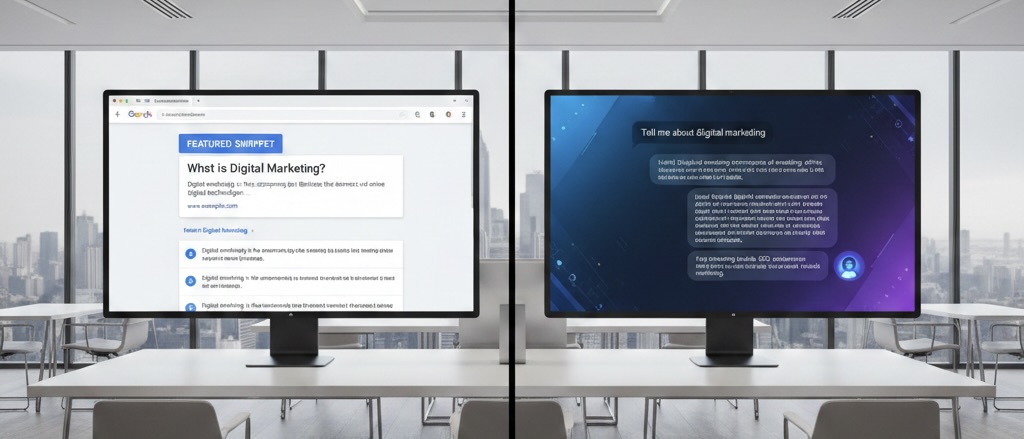
Featured Snippets vs AI Answer Engines: Who Owns Search Visibility?
Featured snippets used to be the pinnacle of search visibility. They offered prime real estate at the top of search results and boosted click-through rates. However, AI answer engines now compete for the same space—often providing direct answers without requiring clicks.
Key differences between traditional snippets and AI answers include:
- Format: Snippets summarize text; AI generates conversational, dynamic responses.
- Intent Matching: AI interprets nuanced questions, context, and previous queries, while snippets rely on static ranking algorithms.
- Click-through Potential: Snippets often drive website visits; AI answers may reduce clicks, delivering answers immediately.
Brands today need to optimize for both ecosystems, ensuring content is structured for snippet eligibility and AI comprehension.
Mastering AEO: The New Frontier
AI Engine Optimization (AEO) focuses on structuring content specifically for AI-powered retrieval systems. Unlike SEO, which emphasizes keywords, AEO emphasizes clarity, authority, and direct answer delivery.
Here are key strategies:
- Answer Questions Directly: Include concise responses to common queries early in the content.
- Structured Formatting: Use headings (H2/H3), bullet points, and tables for scannability.
- Semantic Relevance: Incorporate related terms and entities naturally.
- Conversational Tone: AI interprets human-friendly language better than overly technical jargon.
- Internal Linking: Connect content clusters to reinforce topical authority.
By adopting AEO practices, businesses can improve visibility in AI answers, voice assistants, and emerging AI-driven search interfaces.
AEO for SMEs: Why It’s a Game-Changer
Small and medium-sized enterprises (SMEs) often struggle to compete with large brands on SEO due to limited budgets. AI Search changes this dynamic. By focusing on structured, authoritative answers, SMEs can appear in AI-powered results, gaining visibility without outspending larger competitors.
Practical steps for SMEs:
- Add FAQ sections targeting real user queries
- Use tables and bullet points for AI parsing
- Implement schema markup to clarify content for AI
- Focus on conversational formatting for voice search
This approach allows SMEs to capture high-intent traffic and establish credibility even in competitive industries.
AI in Industry Applications: Beyond Marketing
AI search isn’t limited to SEO and content marketing—it’s reshaping entire industries. Take hospitality, for example: AI-powered booking engines in Malaysia aggregate reviews, availability, and pricing, providing instant recommendations to users. Businesses that optimize for AI search can capture attention at critical decision points.
Other applications include:
- Retail: AI-powered product finders
- Finance: Chatbots answering banking queries
- Healthcare: AI Q&A systems providing preliminary guidance
AI Search & Visibility Strategy ensures content is discoverable across all platforms, from Google Search to smart home devices.
Structuring Your AI Search & Visibility Strategy
A structured AI visibility strategy bridges the gap between traditional SEO and AEO. Here’s a step-by-step guide:
- Audit Existing Content: Identify pages that answer specific questions.
- Structure for Readability: Use H2/H3 headings, tables, bullet lists.
- Target AI Queries: Write content as direct answers to questions users may ask verbally or in text.
- Implement Internal Linking: Connect all related posts to form a topical cluster.
- Monitor AI Performance: Track which content appears in AI answers and adjust accordingly.
Example Table: Featured Snippet vs AI Answer Optimization
| Feature | Featured Snippet | AI Answer Engine |
|---|---|---|
| Response Format | Text snippet | Conversational summary |
| Content Type | Static content | Dynamic, context-aware |
| User Interaction | Click to website | Often no click required |
| Ideal Optimization | Keyword-rich, structured | Question-answer, semantic clarity |
| Target Platforms | ChatGPT, Bing AI, Google AI |
This table illustrates how different strategies are required for each visibility channel while showing the importance of optimizing for both.
FAQs for AI Search & Visibility Strategy
Here are common questions AI systems are likely to generate:
Q1: What is AEO and how is it different from SEO?
A1: AEO focuses on structuring content for AI systems, prioritizing direct answers, clarity, and conversational formatting, whereas SEO emphasizes keyword ranking.
Q2: Can SMEs compete with big brands using AI search?
A2: Yes. By optimizing for AI queries and structuring content clearly, SMEs can capture visibility even without large SEO budgets.
Q3: How do AI answer engines choose which content to display?
A3: AI evaluates relevance, clarity, authority, and structure, prioritizing content that directly answers user questions.
Q4: Is internal linking important for AEO?
A4: Absolutely. Internal linking forms a topical cluster, signaling to AI systems that your site is authoritative on a specific subject.
Q5: Will AI search replace SEO completely?
A5: Not entirely. SEO still matters for traditional search rankings, but AEO is essential for visibility in AI-driven search and voice assistants.
Conclusion
AI search is no longer optional—it’s a new standard for visibility. Brands that structure content for both human readers and AI systems gain an undeniable advantage. By implementing AEO strategies, SMEs and large enterprises alike can ensure that their content appears in featured snippets, AI chat summaries, and voice search results.
Success comes down to clear answers, structured formatting, and authoritative content. Businesses that embrace AI search early will not only maintain visibility but also gain a competitive edge in attracting high-intent users.
TL;DR: AI Search & Visibility Strategy means optimizing your content for both traditional search and AI-driven platforms. Focus on clear answers, structured content, and internal linking to dominate visibility in 2026.