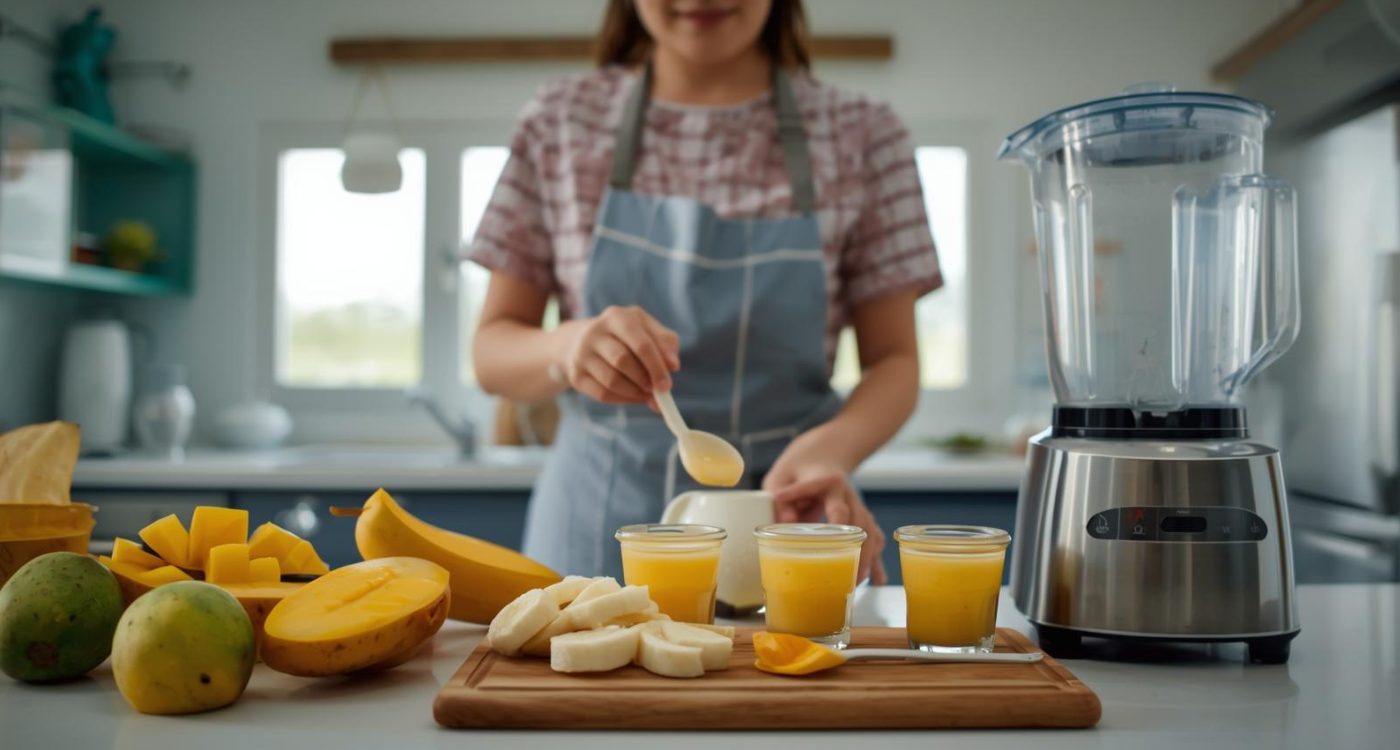
Homemade mango and banana purees are safe, nutritious, and delicious first foods for Malaysian babies. They provide essential vitamins, natural sweetness, and smooth textures that make them ideal for introducing solids. Preparing them at home allows parents to control freshness, avoid preservatives, and adjust consistency to suit each baby’s developmental stage.
By offering homemade purees, caregivers can ensure that babies enjoy natural flavors while benefiting from the antioxidants, fiber, and potassium these fruits provide. Additionally, combining mangoes and bananas can introduce babies to a balance of taste and nutrients, making mealtime enjoyable and healthy.
Why Homemade Purees Are Best
1. Nutritional Superiority
- Freshness: Homemade purees retain more nutrients than pre-packaged alternatives.
- No Added Sugar: Commercial purees often contain added sugar or preservatives.
- Customizable Texture: Smooth or slightly chunky based on baby’s age and chewing ability.
2. Controlled Ingredients
Parents can avoid allergens, additives, and artificial flavors. This is particularly important for babies under one year, whose digestive systems are still developing.
3. Cost-Effective and Convenient
Making your own purees from local Malaysian fruits is more affordable than buying imported baby foods and allows batch preparation for freezing and later use.
Nutritional Benefits of Mango and Banana
| Fruit | Key Nutrients | Benefits for Babies |
|---|---|---|
| Mango | Vitamin A, Vitamin C, Fiber | Supports eye health, immunity, digestion |
| Banana | Potassium, Vitamin B6, Fiber | Supports muscle function, digestion, energy |
Combining both fruits delivers a balanced nutrient profile that supports growth and development while introducing babies to diverse flavors.
Choosing the Right Fruits
- Mango: Opt for ripe, sweet varieties such as Harumanis or Chokanan. Avoid overly fibrous or underripe mangoes.
- Banana: Choose firm yet ripe bananas (Cavendish or local pisang emas). Avoid overly brown bananas to reduce excessive sweetness and mushiness.
- Freshness Matters: Always select fruits free from bruises or mold to ensure safety.
Preparing Homemade Purees
Step-by-Step: Mango Puree
- Wash and peel the mango thoroughly.
- Remove the seed and chop the flesh into small cubes.
- Blend until smooth using a food processor or blender.
- Optionally, strain to remove fibers for younger babies.
Step-by-Step: Banana Puree
- Peel the banana and cut into slices.
- Mash with a fork for younger babies, or blend for smoother texture.
- Optionally, mix with a little breast milk or formula for a thinner consistency.
Combining Mango and Banana
- Blend equal parts mango and banana for a naturally sweet and creamy puree.
- Adjust thickness with water, formula, or breast milk based on baby’s age.
Storage Guidelines for Homemade Purees
| Storage Method | Duration | Tips |
|---|---|---|
| Refrigerator | 24–48 hours | Store in airtight containers; avoid metal lids to prevent oxidation |
| Freezer (Ice Cube Tray) | Up to 3 months | Freeze in small portions; thaw in the fridge before serving |
| Freezer (Glass Jars) | Up to 2 months | Leave 1–2 cm space for expansion |
Label containers with dates to track freshness and rotate older batches first.
Tips for Introducing Purees to Babies
- Start Slowly: Introduce one fruit at a time to monitor for allergies.
- Observe for Reactions: Watch for signs like rashes, vomiting, or diarrhea.
- Texture Progression: Begin with smooth purees, then gradually introduce soft chunks.
- Avoid Additives: Skip sugar, salt, and honey for babies under one year.
- Temperature: Serve slightly chilled or room temperature to prevent burns.
Flavor Enhancements & Variations
- Mango & Banana with Oats: Add cooked oats for added fiber.
- Mango & Banana with Avocado: Introduce healthy fats.
- Mango & Banana with Yogurt: For babies older than six months, yogurt adds probiotics.
- Spices: Small pinch of cinnamon or nutmeg (after six months) can enhance flavor naturally.
FAQ: Common Questions About Homemade Purees
Q: When can I start giving mango and banana purees?
A: Most babies can start fruit purees around 6 months, after being introduced to iron-rich solids.
Q: Can frozen purees lose nutrients?
A: Minimal nutrient loss occurs during freezing; most vitamins are retained, making freezing an excellent storage option.
Q: How can I tell if the fruit is ripe enough for puree?
A: Mangoes should be fragrant and slightly soft; bananas should be yellow with minimal brown spots.
Q: Can I mix other fruits with mango and banana?
A: Yes, fruits like papaya, pear, or apple complement the puree and introduce variety.
Q: Is it safe to sweeten the puree?
A: Avoid adding sugar or honey. The natural sweetness of mango and banana is sufficient for babies.
Safety Tips for Malaysian Parents
- Wash fruits thoroughly to remove pesticides and dirt.
- Peel skins and remove seeds to prevent choking hazards.
- Use clean utensils and sterilized containers to prevent contamination.
- Freeze in small portions to prevent waste and maintain freshness.
Nutritional Table: Recommended Daily Fruit Intake
| Age | Daily Fruit Portion | Notes |
|---|---|---|
| 6–8 months | 1–2 tbsp | Smooth puree only |
| 8–10 months | 2–4 tbsp | Gradually introduce soft chunks |
| 10–12 months | ¼–½ cup | Mix with other fruits or cereals |
Following these portion guidelines ensures balanced nutrition without overfeeding.
Creative Serving Ideas
- Breakfast: Mango & banana puree over rice cereal.
- Snack: Freeze puree in silicone molds for baby-friendly popsicles.
- Lunch: Mix with mashed vegetables like sweet potato or pumpkin.
- Dessert: Combine with unsweetened yogurt for a creamy treat.
Homemade Purees as a Developmental Tool
- Texture Exploration: Babies develop chewing and swallowing skills with gradual texture changes.
- Flavor Familiarity: Early exposure to natural flavors encourages acceptance of fruits later in life.
- Nutritional Learning: Parents can introduce diverse vitamins, minerals, and fiber in a controlled way.
Why Homemade Mango & Banana Purees Are a Game-Changer
Homemade fruit purees provide Malaysian parents with control over quality, freshness, and nutrition. By making purees at home, you avoid preservatives and introduce babies to the natural taste of fruits from an early age.
- Freshness and Safety: Ensure every spoonful is clean and nutrient-rich.
- Customizable Textures: Adjust smoothness or chunkiness according to baby’s development.
- Flavor Education: Early exposure to natural flavors helps develop a healthy palate.
- Cost-Effective: Avoid expensive imported baby foods while using local fruits.
Ultimately, homemade mango and banana purees combine health, convenience, and taste—making them a cornerstone of early nutrition in Malaysia. Parents who embrace this approach provide their babies with a head start on lifelong healthy eating habits.