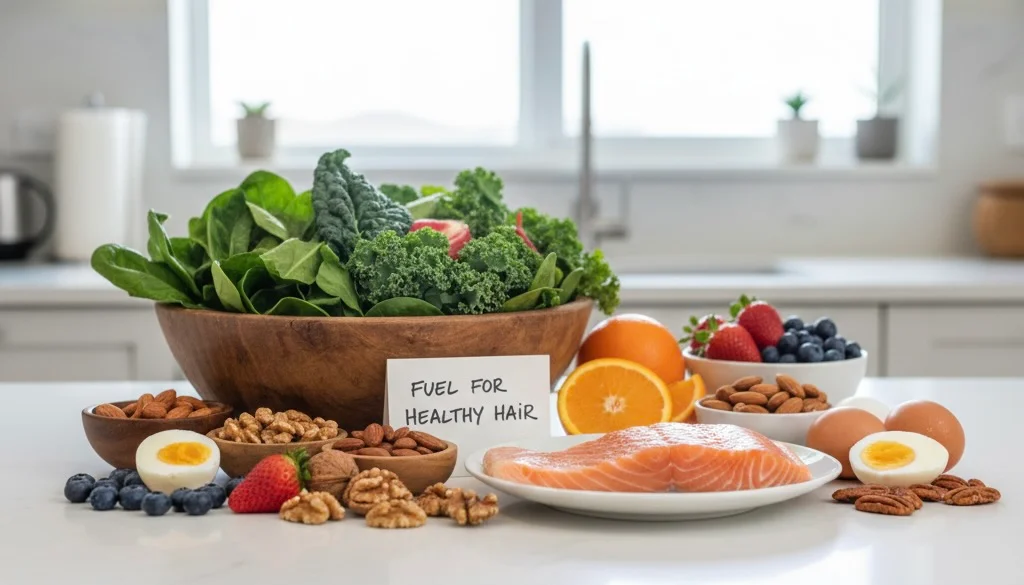
You can strengthen your hair and reduce hair fall naturally by following a nutrient-rich, balanced diet that supports hair follicle health, reduces inflammation, and provides the building blocks for strong strands. Hair growth isn’t just about shampoos or oils—it starts from within, and the right foods can make a visible difference over time.
If you’ve been noticing more strands in your brush or shower, don’t worry. Hair shedding is natural, but frequent or excessive hair fall can often be improved with a diet rich in proteins, vitamins, minerals, and healthy fats. By incorporating these foods consistently, you create the ideal internal environment for your hair to grow stronger, thicker, and less prone to breakage.
How Nutrition Impacts Hair Health
Hair is mostly protein, so what you eat directly affects how strong and resilient your strands are. Poor nutrition can weaken the hair shaft, slow growth, and even contribute to hair loss. Conversely, a well-balanced diet nourishes hair from the follicle up, giving it strength and shine.
Key Nutrients for Healthy Hair
| Nutrient | Role in Hair Health | Natural Sources |
|---|---|---|
| Protein | Builds hair structure | Eggs, fish, beans, lean meat |
| Biotin | Strengthens hair | Almonds, sweet potatoes, eggs |
| Iron | Prevents hair thinning | Spinach, red meat, lentils |
| Zinc | Repairs follicles | Pumpkin seeds, chickpeas |
| Omega-3 | Reduces inflammation | Salmon, walnuts, flaxseed |
| Vitamin C | Supports collagen production | Oranges, strawberries, bell peppers |
| Vitamin D | Stimulates hair follicles | Fortified milk, mushrooms, sunlight |
| Vitamin E | Improves scalp circulation | Nuts, seeds, avocado |
Tip: Pair iron-rich foods with vitamin C to improve absorption and maximize hair benefits.
Top Foods for Stronger Hair
Eating the right mix of nutrients is essential, but knowing which foods specifically support hair can make meal planning easier.
Protein-Rich Foods
Protein is the building block of hair. Include:
- Lean meats like chicken or turkey
- Fish, especially salmon and mackerel
- Eggs and dairy
- Plant-based proteins like lentils, chickpeas, and tofu
Healthy Fats
Omega-3 fatty acids reduce inflammation and promote scalp health. Incorporate:
- Fatty fish
- Flaxseed and chia seeds
- Walnuts
- Olive oil and avocado
Vitamin-Packed Produce
- Citrus fruits for vitamin C
- Leafy greens like spinach and kale for iron
- Bell peppers, sweet potatoes, and carrots for antioxidants
Daily Meal Plan for Hair Health
Here’s a sample daily plan that combines protein, vitamins, and minerals for optimal hair strength:
Breakfast: Oatmeal with chia seeds, almond butter, and berries
Snack: Handful of walnuts and a kiwi
Lunch: Grilled salmon with quinoa and steamed spinach
Snack: Greek yogurt with pumpkin seeds
Dinner: Lentil stew with carrots, bell peppers, and brown rice
Tip: Consistency over time is key—hair follicles respond gradually to improved nutrition.
How Hydration Affects Hair Growth
We often hear about eating the right foods for healthy hair, but water—our most basic nutrient—is just as crucial. Hair is made of keratin, a protein that relies on moisture to maintain strength, flexibility, and shine. When your body is dehydrated, every cell—including your hair follicles—suffers, leading to weaker strands and increased hair fall.
1. Scalp Health Starts with Water
Your scalp is the foundation for hair growth. Without proper hydration, the scalp can become dry, flaky, and irritated, which can slow down follicle activity. Dry scalp also makes hair more brittle and prone to breakage. Staying hydrated keeps your scalp supple, nourished, and better able to support strong hair growth.
2. Hair Strength and Elasticity
Hydrated hair strands are more flexible and less likely to snap. Think of hair like a rope: dry, brittle rope breaks easily, while a rope with moisture stretches and holds together. Water works from the inside out, helping hair retain natural moisture and maintain its elasticity.
3. Nutrient Transport
Water is the body’s primary medium for transporting nutrients to every cell. Even if you eat a diet rich in protein, iron, and vitamins, dehydration can slow nutrient delivery to the follicles, reducing hair growth efficiency. Adequate water intake ensures your hair gets the nutrients it needs to grow thicker and stronger.
4. Detoxification and Hair Follicle Environment
Hydration helps your body flush out toxins through urine and sweat. Toxins can build up in the bloodstream and affect hair follicle health. By drinking enough water, you create a cleaner, healthier internal environment, allowing hair follicles to function optimally.
Practical Hydration Tips for Hair Growth
- Aim for 1.5–2 liters of water daily, or more if you exercise or live in a hot climate.
- Include water-rich foods like cucumbers, watermelon, oranges, and leafy greens.
- Limit dehydrating drinks such as excessive coffee or alcohol, which can counteract water intake.
- Use a reminder app or reusable water bottle to track daily consumption.
Pro Tip: Pairing hydration with a nutrient-rich diet amplifies hair growth results. A well-hydrated body absorbs vitamins and minerals more efficiently, supporting strong and healthy hair.
Supplements: When Food Isn’t Enough
Whole foods should be the primary source of nutrients, but sometimes supplements help:
- Biotin for hair strength
- Omega-3 capsules if you don’t eat fish
- Iron if tests show deficiency
Caution: Always consult a doctor before taking supplements, especially iron, as excess intake can be harmful.
Foods & Habits to Avoid
Some habits and foods can weaken hair:
- Excess sugar and processed foods
- Very low-protein diets
- Excessive alcohol or smoking
- Overly restrictive diets
Limiting these can reduce hair fall and improve hair density naturally.
Table: Nutrient Sources vs Hair Benefits
This table summarizes the main nutrients, their sources, and specific hair benefits, providing a quick reference for readers and search engines.
| Nutrient | Food Sources | Hair Benefit |
|---|---|---|
| Protein | Eggs, fish, beans | Strengthens strands |
| Biotin | Almonds, sweet potato | Reduces hair breakage |
| Iron | Spinach, red meat | Prevents thinning |
| Zinc | Chickpeas, pumpkin seeds | Supports follicle repair |
| Omega-3 | Salmon, flaxseed | Moisturizes scalp, reduces inflammation |
| Vitamin C | Citrus, bell peppers | Collagen support |
| Vitamin E | Nuts, avocado | Improves circulation |
Lifestyle Tips That Complement Diet
- Manage stress: meditation, yoga, or light exercise
- Sleep 7–9 hours to promote cellular repair
- Avoid excessive heat styling and chemical treatments
- Massage scalp regularly to boost circulation
Diet and lifestyle together create a synergistic effect for hair growth and strength.
FAQs About Diet and Hair Health
Q1: Can diet alone stop hair fall?
A1: Diet can significantly reduce hair fall caused by nutrient deficiencies but won’t reverse genetic hair loss.
Q2: How long before I see results?
A2: With consistent nutrition, hair becomes stronger in 2–3 months; visible growth may take 4–6 months.
Q3: Is protein more important than vitamins?
A3: Both are crucial—protein builds hair, while vitamins and minerals support follicle health.
Q4: Can I eat plant-based and still have strong hair?
A4: Absolutely, as long as you include diverse protein sources, iron, zinc, and omega-3s.
Nourish from Within for Strong, Healthy Hair
Healthy hair isn’t just a cosmetic goal—it’s a reflection of internal wellness. By prioritizing nutrient-rich foods, hydration, and mindful lifestyle choices, you naturally reduce hair fall and strengthen each strand.
Remember, hair growth is a journey, not a sprint. Small, consistent changes in your diet and habits compound over time, giving you thicker, stronger, and more resilient hair while improving overall health. With patience and the right approach, your hair can thrive as a natural extension of your body’s wellness.