Is Your Cat’s Food Quietly Affecting Their Health?
Most cat owners in Malaysia choose cat food the same way — they scan the shelf, check the price, and grab whatever fits the budget. It makes sense. Cat food is a recurring cost, and cheaper options seem like a practical choice when quality brands can cost two or three times more.
But here is a question worth asking: what exactly goes into affordable cat food, and could it be affecting your cat without you realising it?
If your cat has been vomiting frequently, scratching more than usual, losing coat quality, or seeming less active — the problem might not be age or environment. It could be what they eat every day.
This guide breaks down the real risks of low-quality cat food, what to look for on the label, and how to make smarter choices without necessarily spending more.
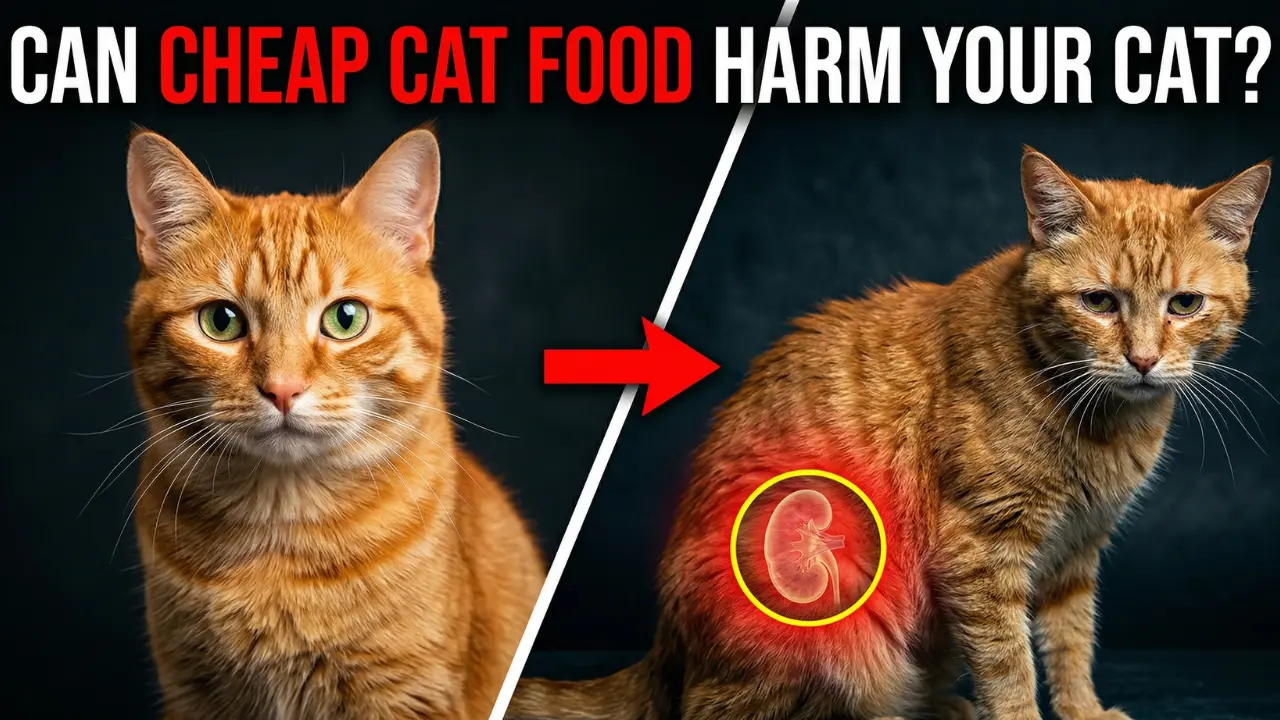
Can Cheap Cat Food Harm Cats?
| Yes — some low-cost cat foods contain artificial additives, low-quality protein sources, and nutritional imbalances that can affect a cat’s long-term health. However, not all affordable cat food is harmful. The key factor is ingredient quality, not price alone. |
What Does “Cheap Cat Food” Actually Mean?
“Cheap” does not automatically mean dangerous. Some budget-friendly brands are simply no-frills — they do not invest in fancy packaging or marketing, but their formulas are adequate.
The real concern is with brands that cut costs by compromising on three key areas:
- Ingredient quality — using lower-grade or unspecified protein sources
- Nutritional balance — skimping on essential nutrients like taurine and omega fatty acids
- Additives — adding artificial colouring, flavour enhancers, and chemical preservatives to make poor-quality ingredients seem more appealing
Understanding these cost-cutting patterns helps you read labels more critically, regardless of price.
Risk #1: Artificial Additives and Preservatives
What Are They?
Many budget cat foods contain a range of artificial additives that serve functional purposes for the manufacturer — not your cat:
- Artificial colouring: Makes wet food look like real meat. Cats do not see colour the way humans do, so this is purely for the owner’s perception.
- Chemical preservatives: Compounds like BHA (butylhydroxyanisole) and BHT (butylhydroxytoluene) extend shelf life at a low cost.
- Flavour enhancers: Mask the taste of low-quality protein so cats will still eat it.
Why Are They a Concern for Cats?
Cats are more sensitive to dietary ingredients than many people realise. Over time, regular exposure to artificial additives may contribute to:
- Skin irritation and allergies
- Digestive problems including vomiting and loose stools
- Chronic low-grade health stress on organs
Vet insight: If your cat scratches frequently, has a dull coat, or experiences recurring digestive upset, diet is often one of the first things a vet will ask about. Artificial additives are a common culprit worth ruling out.
Risk #2: Low-Quality Protein Sources
Why Protein Quality Matters for Cats
Cats are obligate carnivores. Unlike dogs or humans, their bodies are biologically designed to run on animal protein — not grains, fillers, or vague meat derivatives. They cannot thrive on plant-based protein the way some other animals can.
This means the type and quality of protein in their food directly impacts how well their body functions.
The Problem With Budget Protein
Many cheap cat foods rely on vague or low-grade protein sources to keep costs down:
- “Meat by-products”: This term can legally include organ scraps, bone fragments, and other parts of the animal with low nutritional value.
- Unnamed protein sources: Labels that say “animal protein” without specifying chicken, fish, or beef are a red flag.
- Grain and carbohydrate fillers: Added to bulk up the food and increase protein percentage on paper, but not usable protein for a cat.
What This Means for Your Cat’s Health
Feeding your cat food with poor-quality protein over a long period can lead to:
- Low energy and reduced activity
- Gradual muscle loss
- Dull, thinning, or brittle coat
- Weakened immune function over time
“Not all protein is equal — quality matters far more than quantity. A cat food with 30% low-grade protein may deliver less usable nutrition than one with 25% high-quality named meat protein.”
Risk #3: Nutritional Imbalance — The Hidden Long-Term Risk
This is perhaps the most overlooked issue with cheap cat food, because the effects are not immediate. A cat can eat nutritionally incomplete food for months before visible symptoms appear.
Key Nutrients Often Missing in Budget Cat Food
- Taurine: An amino acid that is absolutely essential for cats — they cannot produce it on their own. Taurine deficiency leads to dilated cardiomyopathy (heart disease) and vision loss. It must be present in sufficient quantities in their diet.
- Omega-3 and Omega-6 fatty acids: Support skin health, coat quality, and inflammation control. Often absent or insufficient in very cheap formulas.
- Balanced vitamins and minerals: Cheap food may not meet the minimum standards for a complete and balanced diet, even if the label implies otherwise.
The danger here is that nutritional deficiency is a slow process. By the time symptoms like heart problems or vision deterioration appear, damage may already be significant. This is why long-term diet quality matters — not just whether your cat eats the food happily today.
How to Identify Better Cat Food: A Practical Checklist
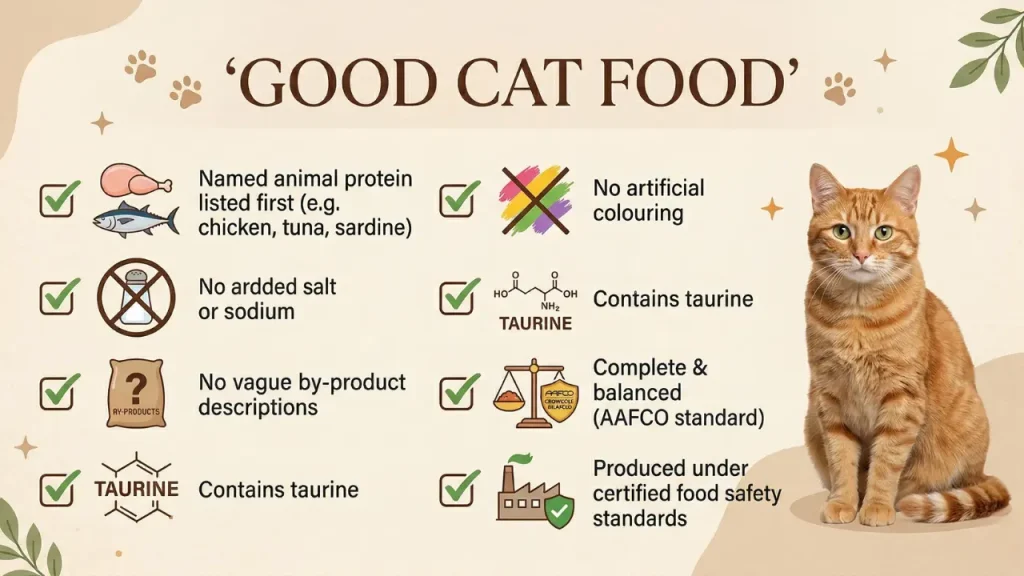
You do not need to spend a fortune. You need to know what to look for. Here is a simple checklist to evaluate any cat food — regardless of price:
- Named animal protein listed first (e.g. “chicken”, “tuna”, “sardine” — not “meat” or “animal protein”)
- No artificial colouring on the ingredient list
- No added salt or sodium
- Taurine listed as an ingredient
- No vague by-product descriptions
- Complete and balanced formulation statement (look for AAFCO or equivalent standard)
- Manufactured under certified food safety standards
The ingredient list is your most powerful tool. Ingredients are listed in descending order by weight — so whatever appears first is what the food is mostly made of.
Cheap vs. Quality Cat Food: A Quick Comparison
| Category | Cheap / Low-Quality Food | Better Quality / Balanced Food |
|---|---|---|
| Protein Source | Meat by-products, unclear sources | Named animal protein (e.g. real chicken, fish) |
| Preservatives | Artificial chemicals (BHA, BHT) | Natural preservatives or none |
| Colouring | Artificial food dyes | No artificial colouring |
| Added Salt | Often added for palatability | No added salt |
| Taurine | May be insufficient | Balanced to meet daily requirements |
| Omega Fatty Acids | Low or absent | Included for coat & skin health |
| Digestibility | Lower — harder on digestion | Higher — easier to digest |
| Long-Term Health Impact | Risk of nutritional deficiency | Supports overall well-being |
Affordable Cat Food That Does Not Cut Corners
“Affordable” and “low quality” are not the same thing. The brands below all sit in the budget-to-mid-range price bracket, yet each takes a different approach to ingredient quality, formulation, and nutrition. Understanding the difference helps you make a smarter choice for your cat — not just the cheapest one.
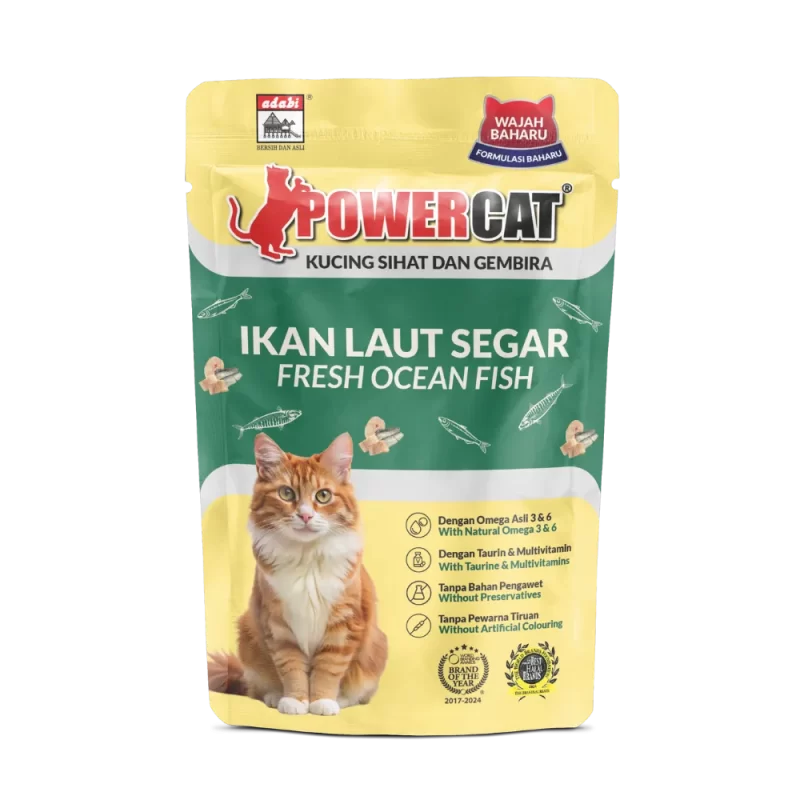
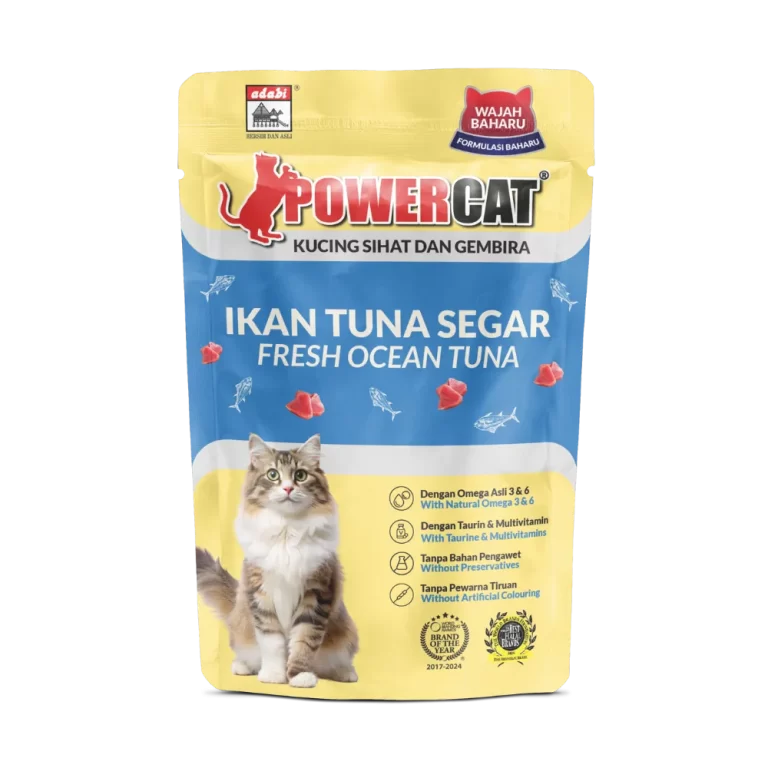
1. Powercat
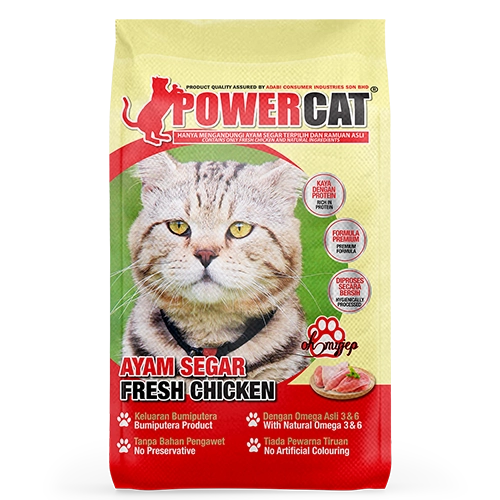
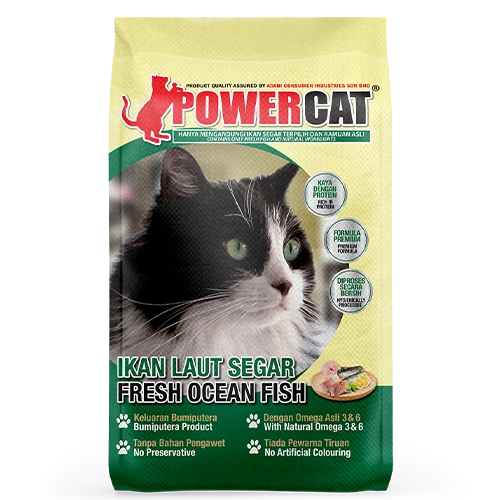
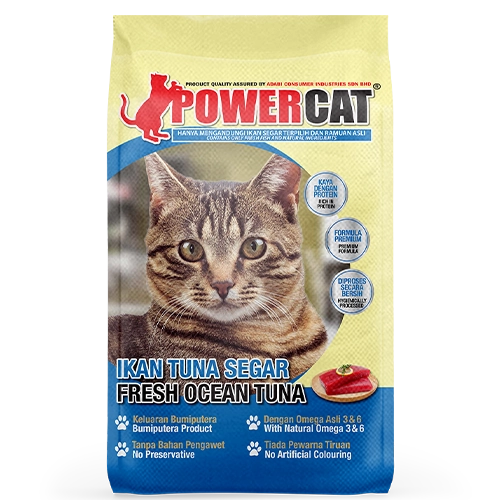
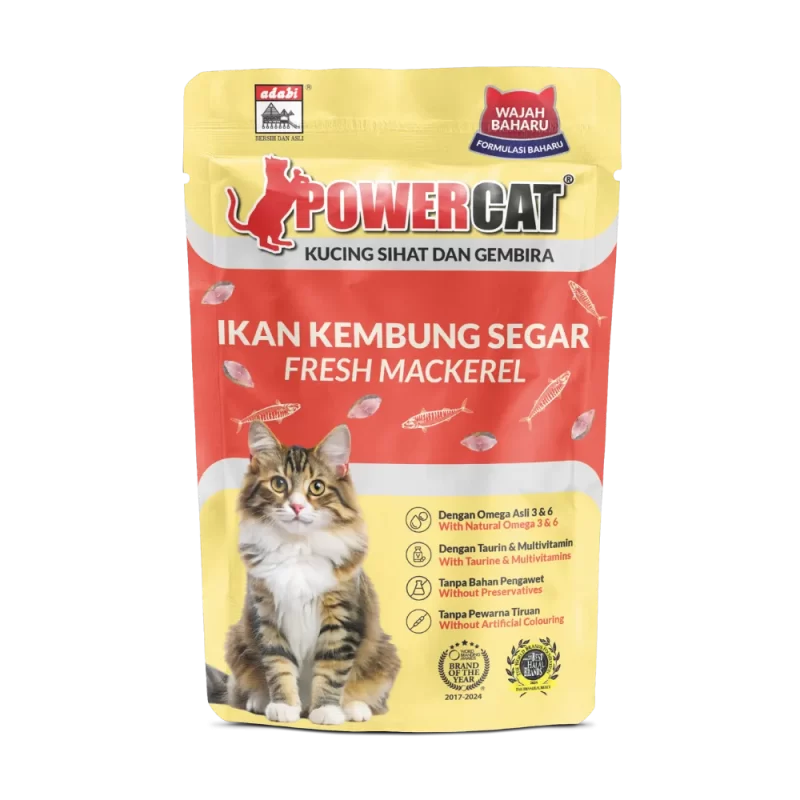
| ✅ What We Like | ⚠️ Worth Knowing |
| Only halal-certified cat food in Malaysia | Primary dry food base includes corn and soybean (not grain-free) |
| No artificial colouring, salt, or preservatives | Less widely available than Whiskas or Royal Canin in supermarkets |
| Taurine clearly included | Wet food uses gelling agents (safe, but lower nutritional value) |
| Competitive protein level (32%) | Range is smaller compared to international brands |
| Locally made — supports Malaysian brand | |
| Available in dry, wet, kitten, and adult variants |
| Price Range Budget–Mid | Best For All life stages | Halal Certified Yes (JAKIM/BPJPH) | Availability (MY) Pet shops, online |


2. WHISKAS
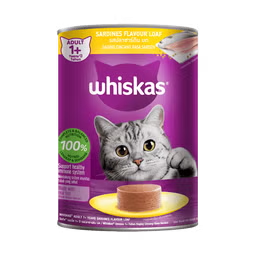
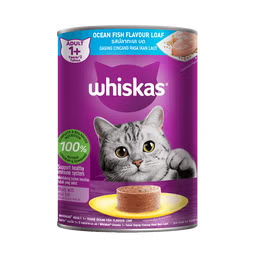
| ✅ What We Like | ⚠️ Worth Knowing |
| Extremely widely available across Malaysia | Dry food is grain-heavy — wholegrain cereals as first ingredient |
| Affordable and consistently priced | Some recipes contain BHA preservative and iodised salt |
| Taurine included across formulas | Uses meat by-products (source not always specified) |
| Good palatability — most cats eat it willingly | High carbohydrate content in dry range — not ideal long-term |
| Wet food range has decent protein from named fish sources | Not halal-certified |
| Life-stage specific options (kitten, adult, senior) | 2021 recall in Canada due to potential mycotoxin contamination |
| Price Range Budget | Best For Adult cats (wet range) | Halal Certified No | Availability (MY) Supermarkets, everywhere |
3. FELIX
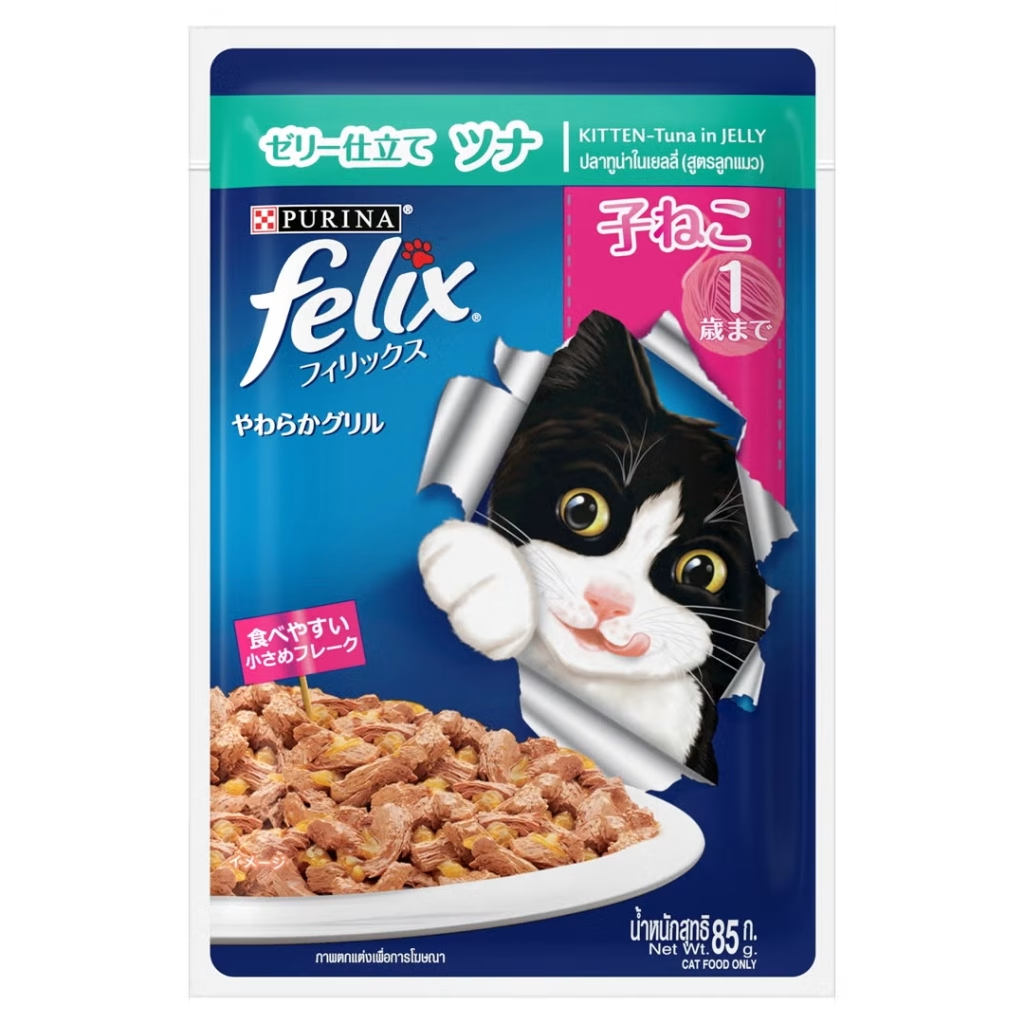
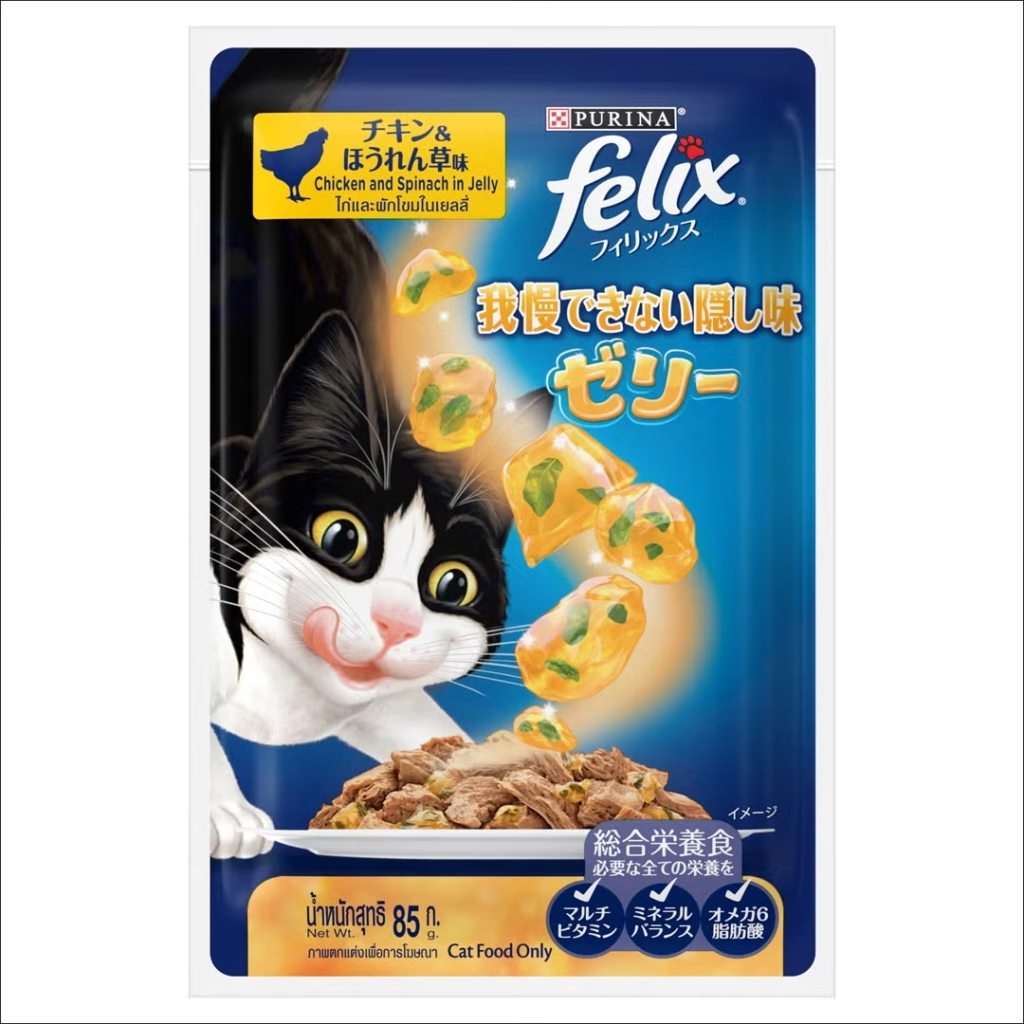
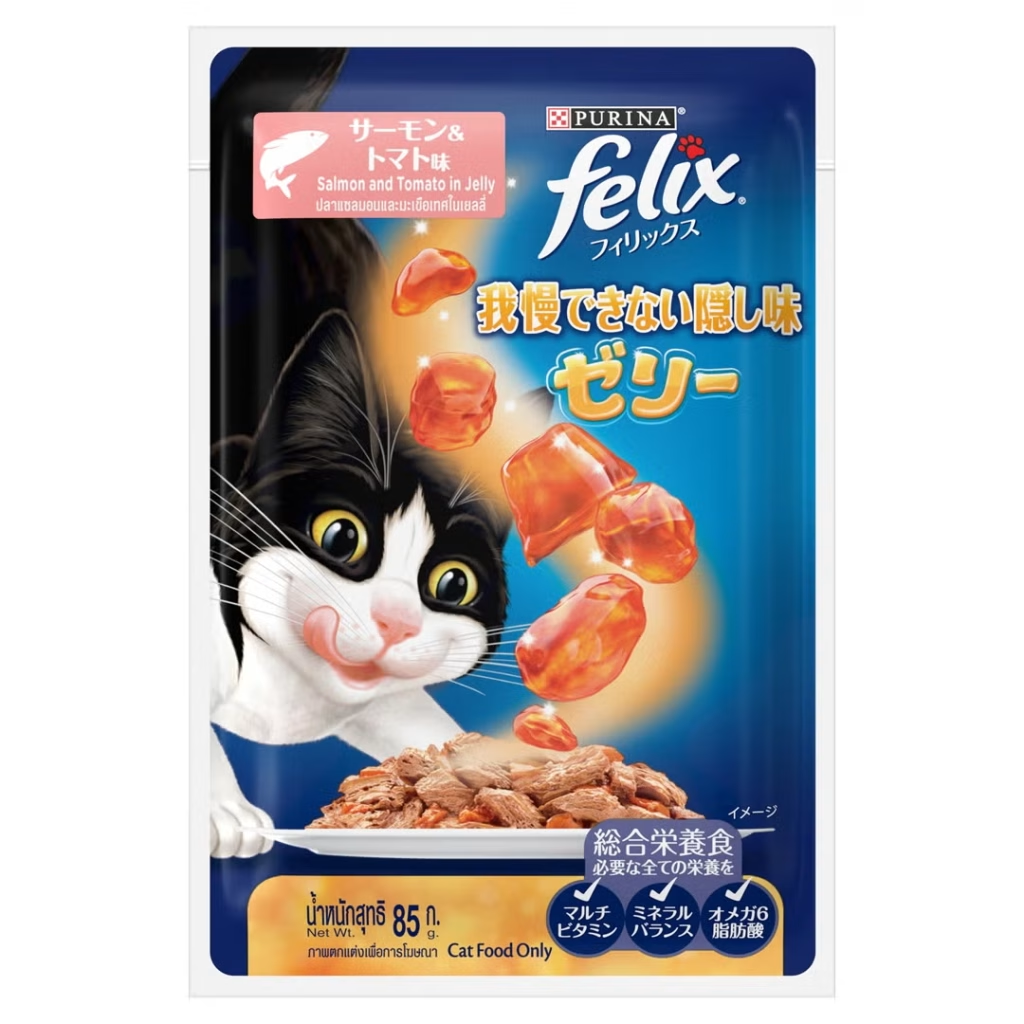
| ✅ What We Like | ⚠️ Worth Knowing |
| High moisture content (83%) — great for hydration | Protein source listed as “meat and animal derivatives” — vague |
| No artificial colourants in most lines | Contains vegetable protein extracts and various sugars |
| Taurine and omega-6 fatty acids included | Not ideal as a sole complete diet long-term |
| Excellent palatability — even fussy cats tend to eat it | No dry food option — wet-only brand |
| Steam-cooked chunks — better texture for cats | Not halal-certified |
| Tasty Shreds line free from added colour, flavours, and preservatives | Quality is consistent across flavours but not across product lines |
| Price Range Budget–Mid | Best For Wet food rotation | Halal Certified No | Availability (MY) Selected stores, online |
4. Purina ONE
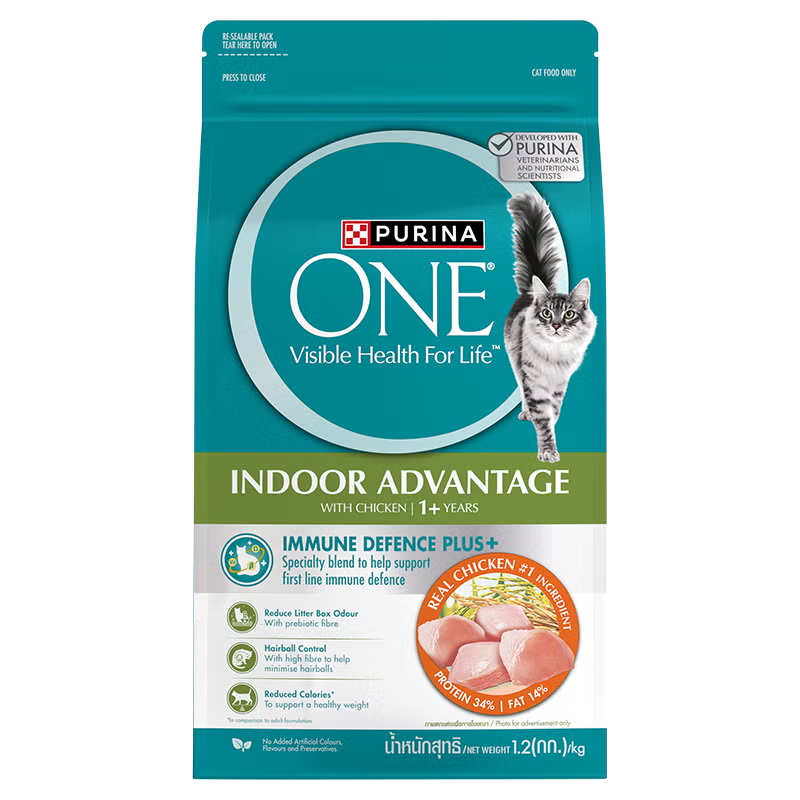
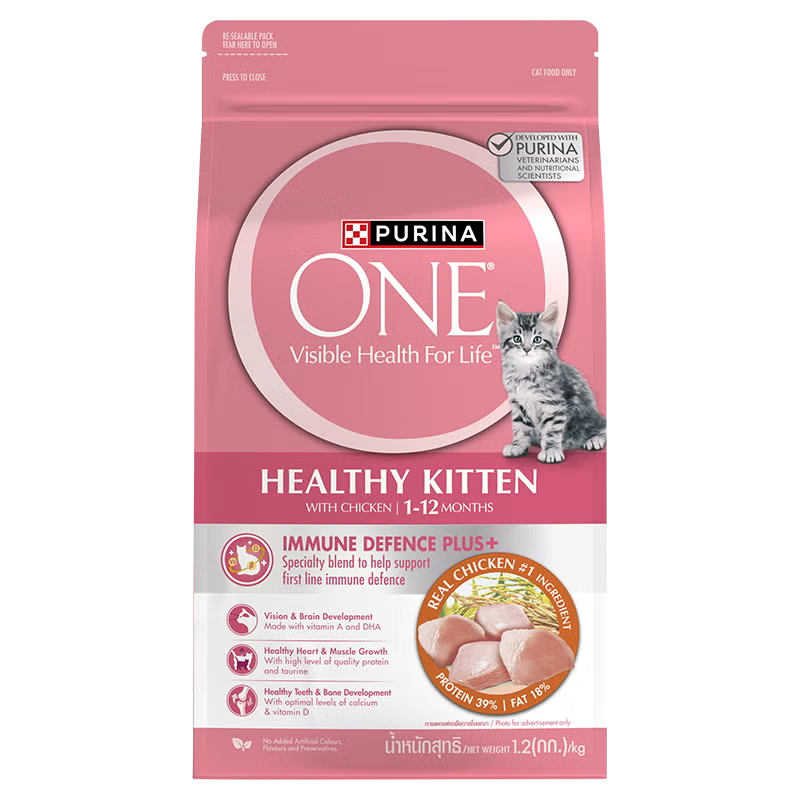
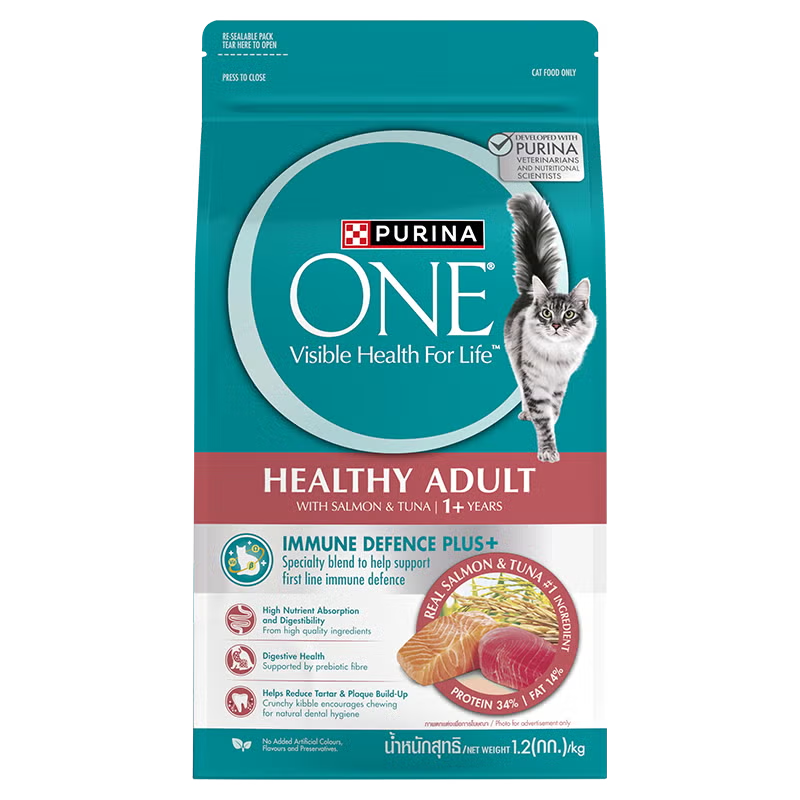
| ✅ What We Like | ⚠️ Worth Knowing |
| Named meat protein (chicken/turkey/salmon) as first ingredient | Dry formulas contain corn gluten meal, rice flour, soybean — higher carbs |
| No artificial flavours or preservatives | Grain content is significant — not grain-free |
| Taurine and prebiotic fibre included | Some dry formulas contain caramel colouring |
| Omega-6 fatty acids for skin and coat support | Contains chicken by-product meal in addition to real chicken |
| AAFCO-complete across most formulas | Not halal-certified |
| Specific formulas for urinary, sensitive stomach, indoor, and senior cats | Two recorded recalls (2011 salmonella risk, 2021 possible plastic in cans) |
| Price Range Mid | Best For Adult cats, sensitive stomach | Halal Certified No | Availability (MY) Pet stores, selected outlets |
5. Royal Canin
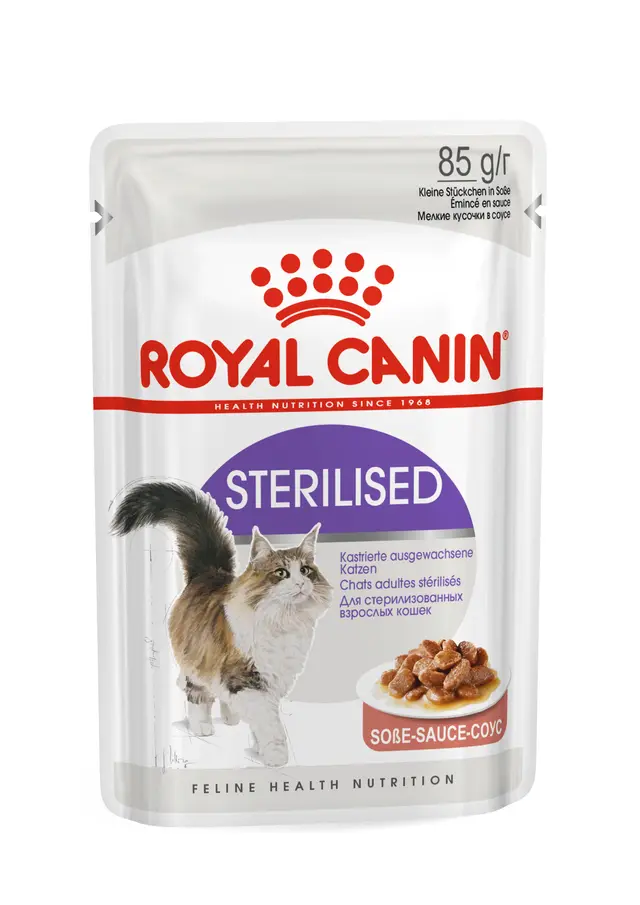
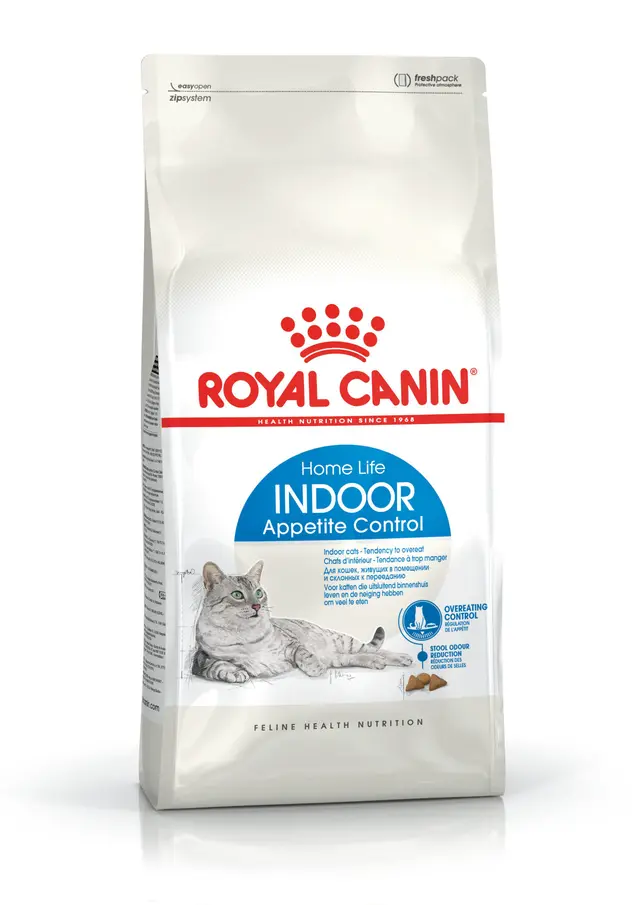
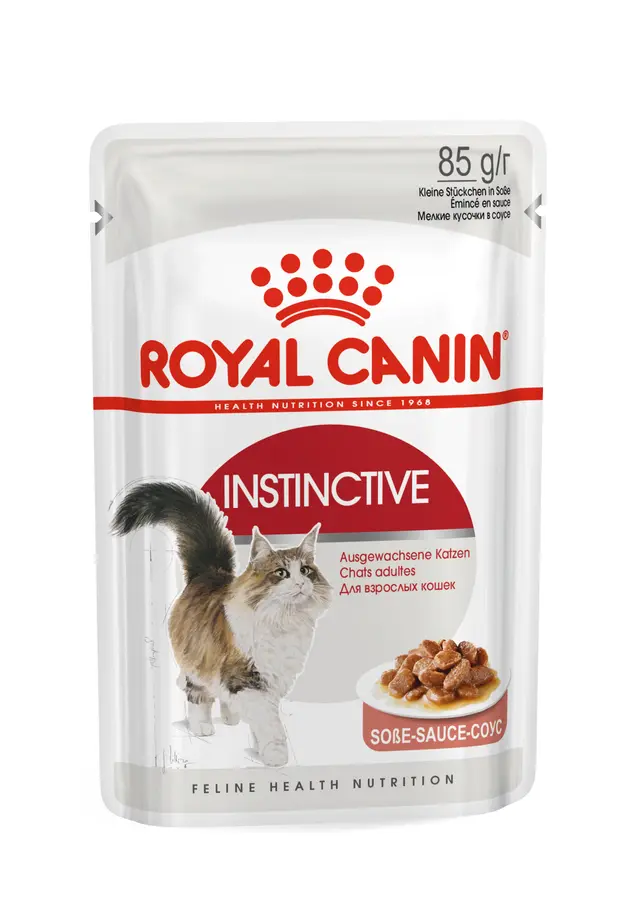
| ✅ What We Like | ⚠️ Worth Knowing |
| Scientifically formulated — backed by veterinary research | Dry food uses chicken by-product meal, corn, wheat — not clean-label |
| Most trusted brand in veterinary clinics in Malaysia | Premium pricing — more expensive than other brands in this list |
| Excellent Veterinary Diet range for cats with health conditions | Ingredient list prioritises function over freshness/transparency |
| Breed-specific and life-stage-specific formulas available | Not halal-certified |
| Very high palatability — even sick or fussy cats often accept it | Some formulas contain propyl gallate and BHA as antioxidants |
| Consistent quality control across global manufacturing | Grain-inclusive across all formulas — no grain-free option |
| Price Range Mid–Premium | Best For Cats with health conditions | Halal Certified No | Availability (MY) Vets, pet stores, hypermarkets |
At a Glance: How These 5 Brands Compare
| Brand | Price Range | Named Protein | No Additives* | Halal | Best Use Case |
|---|---|---|---|---|---|
| Powercat | Budget | Fish meal ✅ | Yes ✅ | Yes ✅ | Everyday, all cats |
| WHISKAS | Budget | Mixed ⚠️ | Partial ⚠️ | No ✖ | Occasional / wet only |
| FELIX | Budget–Mid | Vague ⚠️ | Original: Yes ✅ | No ✖ | Wet food rotation |
| Purina ONE | Mid | Chicken/Fish ✅ | Yes ✅ | No ✖ | Healthy adult cats |
| Royal Canin | Mid–Premium | By-products ⚠️ | Partial ⚠️ | No ✖ | Health condition cats |
*No artificial colouring, no added salt, no chemical preservatives
What Cat Owners Notice After Switching to Better Food
The difference between low-quality and higher-quality cat food does not always show up as a dramatic health crisis. More often, it shows up as gradual, positive change when owners make a switch:
- Better digestion: Less vomiting, firmer stools, and fewer digestive upsets.
- Improved coat condition: Shinier, softer fur and less excessive shedding.
- More consistent energy: Cats become more playful and active when they are genuinely well-nourished.
- Better appetite regulation: High-quality food satisfies cats more effectively, which can reduce overeating.
Many cat owners in Malaysia report noticeable improvements within a few weeks of switching from very cheap food to a cleaner, more balanced diet — without necessarily spending significantly more.
So Is All Cheap Cat Food Bad?
No — and it is important to say that clearly.
Price alone does not determine whether a cat food is good or bad. Some very expensive premium brands have unnecessarily complex formulas that offer no real benefit over a mid-range balanced option. And some affordable brands do a genuinely good job of meeting a cat’s nutritional needs.
The key question is not “How much does it cost?” — it is “What is actually in it?”
Final Thoughts: Small Daily Choices, Long-Term Impact
Your cat eats the same food every single day. That daily repetition means even small differences in ingredient quality add up significantly over months and years.
The good news is that making a better choice does not have to mean a bigger budget. It means being a slightly more informed shopper — spending 60 seconds reading the ingredient list instead of just looking at the price tag.
Look for real, named protein. Avoid artificial colouring and added salt. Check for taurine. And remember: affordable does not have to mean low quality — some brands manage to strike exactly the right balance between nutrition and price. Those are the ones worth considering.
Frequently Asked Questions (FAQ)
It depends on the brand and ingredients. Some affordable cat foods meet proper nutritional standards, while others contain artificial additives and insufficient nutrients. Always check the ingredient list before committing to a daily diet.
Avoid cat foods that list artificial colouring, chemical preservatives (such as BHA or BHT), added salt, and vague protein sources like “meat by-products” or “animal protein” without a named species.
Several brands offer a balance of quality and affordability in Malaysia, including Powercat (halal-certified, fish-based), WHISKAS, FELIX, and Purina ONE. The best option depends on your cat’s age and specific nutritional needs.
Artificial additives, low-quality protein, and difficult-to-digest ingredients found in some cheap cat foods can contribute to digestive upset, including vomiting. If your cat vomits frequently, reviewing their diet is a sensible first step.
At minimum, a complete cat food should contain adequate taurine, high-quality animal protein, omega fatty acids, and a balanced vitamin and mineral profile. Taurine is especially critical — deficiency can lead to serious heart and eye conditions.
Yes. Several brands sold in Malaysia carry halal certification, including Powercat. When choosing halal cat food, look for official certification marks and ingredient transparency alongside the halal status.