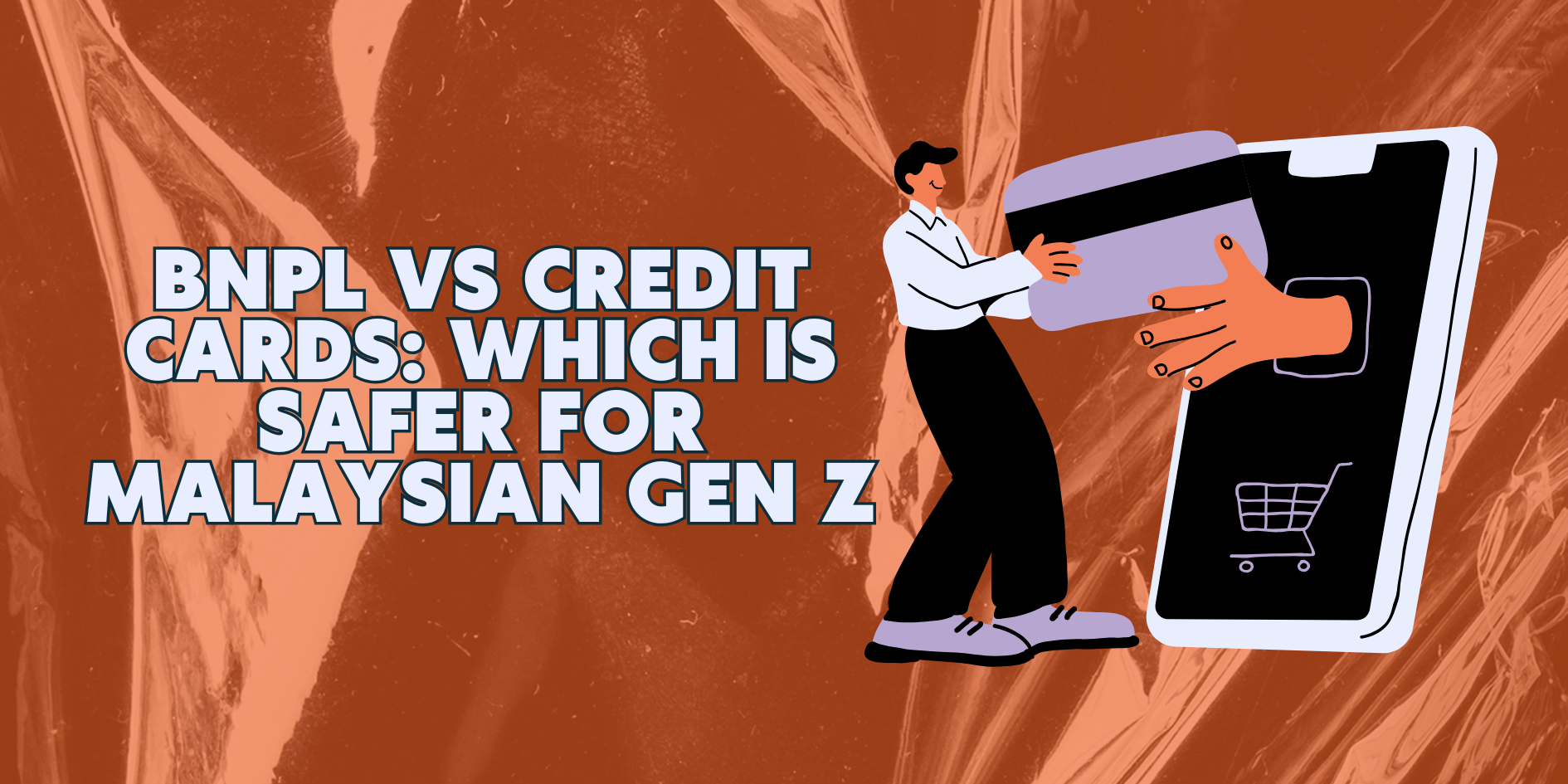
Choosing between Buy Now, Pay Later (BNPL) and traditional credit cards as a Gen Z consumer in Malaysia depends on your financial discipline and long-term credit goals. BNPL services like Grab PayLater or Atome are generally “safer” for short-term, interest-free budgeting because they offer fixed installment plans and lack the compounding interest traps of revolving credit. However, with the implementation of the Consumer Credit Act (CCA) 2025, BNPL is now more regulated, meaning while it is more accessible for those without high incomes, your repayment behavior is more strictly tracked and can impact your credit score just like a bank card.
Credit cards remain the superior choice for consumer protection and wealth building, offering robust fraud insurance, section 75-style protections for faulty goods, and valuable rewards points. While credit cards carry a higher risk of long-term debt due to high-interest rates (often up to 18% per annum in Malaysia), they are the most effective tool for building a strong CTOS/CCRIS record. For the average Gen Z professional, the “safest” path is often using BNPL for predictable, small-ticket lifestyle purchases while maintaining a single credit card for emergencies and credit-building—provided you pay the balance in full every month.
In 2025, the Malaysian financial landscape has shifted. With BNPL transaction values surging to over RM9 billion in the first half of the year alone, young Malaysians are moving away from traditional banking. But as the “Wild West” of unregulated lending ends with the new Consumer Credit Act, which one actually protects your future?
1. Accessibility: The Low Bar of BNPL
For many Malaysian Gen Zs, the choice isn’t about which is “better,” but which is “possible.”
- Instant Gratification: BNPL providers often only require a valid IC and a mobile number. Approval is near-instant, making it the default for freelancers and gig workers who may lack the “three months’ salary slip” required by major banks like Maybank or CIMB.
- The Credit Catch: Because BNPL uses “alternative credit scoring” (like your Grab ride history or Shopee spending habits), it feels more inclusive. However, under the 2025 regulations, these providers must now conduct more rigorous “affordability assessments” to ensure you aren’t over-extending yourself.
2. Safety and Regulation: The CCA 2025 Era
Previously, credit cards were the “safe” option because they were strictly governed by Bank Negara Malaysia (BNM). BNPL was a bit of a gray area. That has changed.
Regulation Comparison: BNPL 2.0 vs. Credit Cards
The table below outlines the legal protections now available under the Consumer Credit Act (CCA) 2025, showing how the safety gap between these two methods is closing.
| Feature | Credit Cards (Regulated by BNM) | BNPL (Regulated by CCOB/CCA 2025) |
| Oversight Body | Bank Negara Malaysia (FSA 2013) | Consumer Credit Oversight Board (CCOB) |
| Interest/Fees | High compounding interest (up to 18%) | 0% interest; Capped late payment fees |
| Dispute Protection | Strong (Chargebacks for faulty goods) | Improved (Shared liability for merchants) |
| Affordability Check | High (Strict income/EPF requirements) | Mandatory (Based on spending & income) |
| Credit Reporting | Reported to CCRIS/CTOS | Now reported to Credit Bureaus |
3. The Psychology of Spending: Friction vs. Freedom
Gen Z’s preference for BNPL is often psychological. We are a generation wary of “debt” but comfortable with “installments.”
- The Illusion of Cost: Breaking an RM600 skincare haul into RM200 chunks makes it feel less painful. This is called “hyperbolic discounting”—valuing the immediate reward over the future cost.
- Credit Card “Spiral”: Credit cards offer a “minimum payment” trap. Paying only 5% of your balance keeps you in debt for years. BNPL, by design, has an “end date,” which provides a mental safety net for those who fear losing control.
4. Building Your Financial “Identity”
Safety isn’t just about avoiding debt; it’s about building a foundation.
- Credit Building: If you want to buy a house in Cyberjaya or a car in five years, you need a credit history. Historically, BNPL didn’t help with this. In 2025, however, timely BNPL payments are increasingly visible to lenders.
- Rewards and Perks: Credit cards still win on “value-add.” From airport lounge access to 5% cashback on petrol, the “safety” of a credit card includes the financial buffer these rewards provide—if you are disciplined enough to never pay interest.
5. Risk Assessment: Where the Danger Lies
Despite the new laws, both tools have “sharp edges” that can hurt your financial health if misused.
Risks and Vulnerabilities Table
This table provides a context for the specific financial traps unique to each payment method, helping you identify which risk you are better equipped to manage.
| Payment Method | Primary Risk | The “Safety” Fix |
| BNPL | Stacking: Having 5 overlapping RM100 installments across different apps. | Use only ONE BNPL provider at a time. |
| Credit Card | Revolving Debt: Only paying the minimum and letting interest compound. | Set an “Auto-Pay Full Balance” instruction. |
| Both | Impulse Buying: Buying things you don’t need because “it’s easy.” | The 24-Hour Rule: Wait a day before hitting “Pay.” |
Frequently Asked Questions (PAA)
1. Does using BNPL affect my ability to get a home loan in Malaysia?
Yes. Since 2025, BNPL providers share data with credit bureaus. Late payments on “PayLater” apps will show up on your CCRIS/CTOS report, potentially causing banks to reject your mortgage application.
2. Which is cheaper: BNPL or a Credit Card?
If you pay on time, BNPL is usually cheaper because it is truly 0% interest. Credit cards often have annual fees (RM25 to RM600+) and service taxes. However, if you miss a payment, BNPL late fees can be steeper as a percentage of the purchase.
3. Is my data safer with a bank or a BNPL app?
Banks generally have higher cybersecurity budgets, but BNPL providers must now comply with the Personal Data Protection Act (PDPA) and CCA 2025 standards. Always enable Two-Factor Authentication (2FA) on your shopping apps.
4. Can I get a refund on a BNPL purchase if the item is broken?
Under the CCA 2025, you have stronger rights. You can raise a dispute through the app, and the provider is legally required to assist in the resolution. However, credit card “chargebacks” are still generally faster and more globally recognized.
5. I’m a freelancer with no fixed income. Should I even try for a credit card?
It’s difficult but possible. Look for “Secured Credit Cards” where you place a fixed deposit as collateral. This is a safer way to build credit than relying solely on BNPL.
Conclusion: The Smart Spender’s Verdict
The debate between BNPL and credit cards isn’t about which tool is “good” or “evil”—it’s about which one fits your current financial maturity. For a Gen Z Malaysian just starting their career, BNPL offers a safe, regulated way to manage monthly cash flow without the terrifying compound interest of a credit card. It is the perfect “training wheels” for the world of credit, especially now that the Consumer Credit Act 2025 has cleared away the predatory fine print.
However, true financial safety comes from diversity. Use BNPL for your lifestyle needs, but don’t ignore the long-term power of a well-managed credit card to build your score and protect your larger purchases. By staying informed and utilizing the protections provided by our new national regulations, you can move from being a “consumer” to being a “strategist.” Your wallet is a tool—make sure you’re the one holding the handle.